In brief.
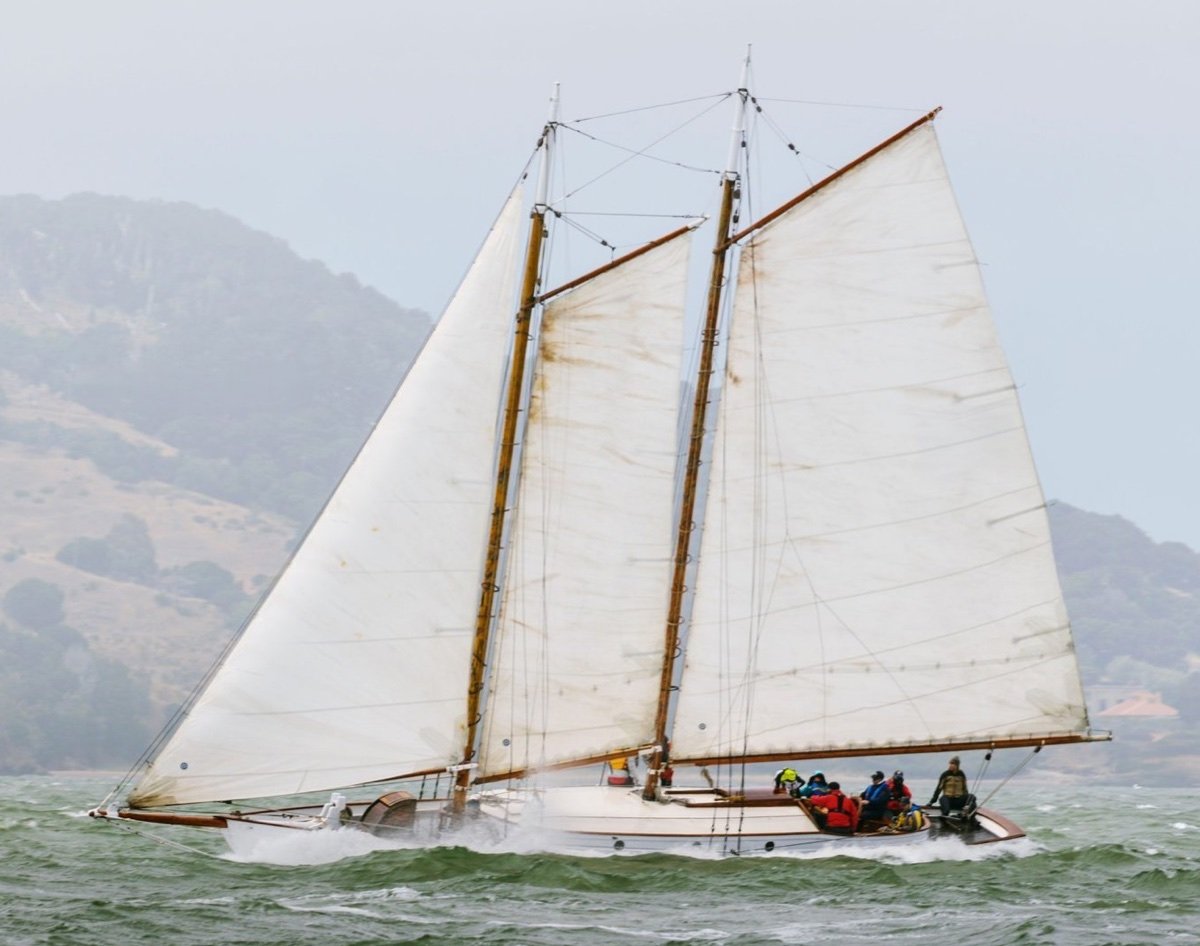
Yankee can sail again. I believe she should.
In a hundred and twenty years Yankee has never had an interruption like this one. She has always been an active boat, raced and cruised every season. She is renowned on this Bay: a storied and celebrated yacht, a yacht club flagship many times over, a boat that has appeared on the silver screen and whose saloon has kept celebrity company. And she has always been well kept: hauled, repaired and renewed whenever she needed it. She was partway through a refit when the pandemic stopped the work. Like so many other things, and so many other boats, she has paid heavily for the years that followed, and she has not sailed since 2019.
Bringing her back began with gathering her up. This year we moved her out of a harbor that cost more than we could justify and across the Bay from San Rafael to Sausalito. We brought her removed parts and her eight spars, two of them solid masts fifty-five feet long, out of the boatyard in Point Richmond where her earlier work had been done. We collected everything that had been taken off her and brought it to Sausalito. We recovered her sails, her standing rigging, her covers and her sundries, down to her silver cups, from paid storage. She and everything that belongs to her are now accounted for and in our keeping.
Before we could go further toward renewing her, we had to address the distress of five years of sitting and understand her needs better. Her previous caretakers helped provide the means to stabilize her and to investigate her hull. She was hauled in August, and experienced shipwrights took planks off and examined her structure closely. What they found is set out in the pages that follow. The critical damage is at the upper ends of her frames, and it has left the frames beyond restoring. Her deck is failing, and it needs new deck beams and new deck planking. Yet the frames have held her hull in shape and her planking tight, and her backbone is sound.
While she was out of the water the shipwrights also made her safe. They replaced damaged planks, repaired the worst of the worm damage, and reseamed and caulked her as necessary to keep her tight. Her bottom was carefully gone over, her through-hull fittings were serviced and her anodes renewed, and she was given new antifouling. Her topsides were gone over, cleaned up and sealed with fresh primer, and the varnish on her transom was resealed. She went back into the water in the autumn and lies at the yard under her winter cover, solid and watertight while we prepare for the work ahead.
The goal is a sound Yankee, rebuilt and updated so that she can be kept sailing for another hundred years. Her frames have to be replaced, every one of them, and reaching them means opening her up: her interior comes out, and her deck, cockpit and cabin house are built new. This is far more than a refit, and it is not a new boat. Her backbone is sound and her hull has kept its shape, so she will be rebuilt from her own structure, on the keel she was launched on.
We believe the work is best done at Richardson Bay Boatworks in Sausalito. Its shipwrights understand her from generations of work on yachts like her, and rebuilding classic wooden boats is their trade. She is already there, a few miles across the Bay from where she was built. The work also matters beyond the boat. A working waterfront is kept by work. The rebuild of a schooner as well known as Yankee highlights Sausalito's historic and active waterfront and brings attention to it, and we intend to use that attention to help the community of yards, shipwrights and trades that works there.
We are raising the money in stages, and each stage begins when its cost is in hand. The first is $75,000, to open her up so that the yard can plan and price everything that follows. Gifts are tax-deductible, every stage is reported in full, and supporters' names will be engraved in the boat herself. This rebuild will be carried by many people: by gifts large and small, by volunteers who give their time, and by the crews who will sail her. I hope you will be one of them.
Yankee deserves to sail on.
Hans HansenPresident, Golden Gate Wooden Boat Foundation
The boat.
What Yankee is, why that is rare, and what a hundred and twenty years have left us to work with.
Two different things can be said for Yankee. The first is her history: the earthquake, the first Farallones race, the family that kept her for nearly a century. That is what happened to her, and it is why people are fond of her. The second is what she is. She was conceived for this Bay's wind, drawn by a Bay yard, built here in the timber this coast builds in, and sailed here ever since. Her history is the reason people care about her. What she is makes the case for rebuilding her.
A San Francisco boat all the way through
Most of the classic yachts sailing on San Francisco Bay were designed somewhere else: in Boston, New York, Scotland or Germany. Many were built there too and brought here later. They are fine boats, and Yankee has raced against their kind for most of her life.
Ask two questions of any of them: where was she drawn, and where was she built? Then ask them of Yankee. For her the answer to both is the same. She was drawn and built at Harbor View in San Francisco, on tidal flats that are now the Marina district and the site of the St. Francis Yacht Club, by the yard of Frank Stone. Family records credit Stone with her design, which was the custom on this Bay, where the builder was usually the designer.
Bay-built is common. Bay-drawn is rare.
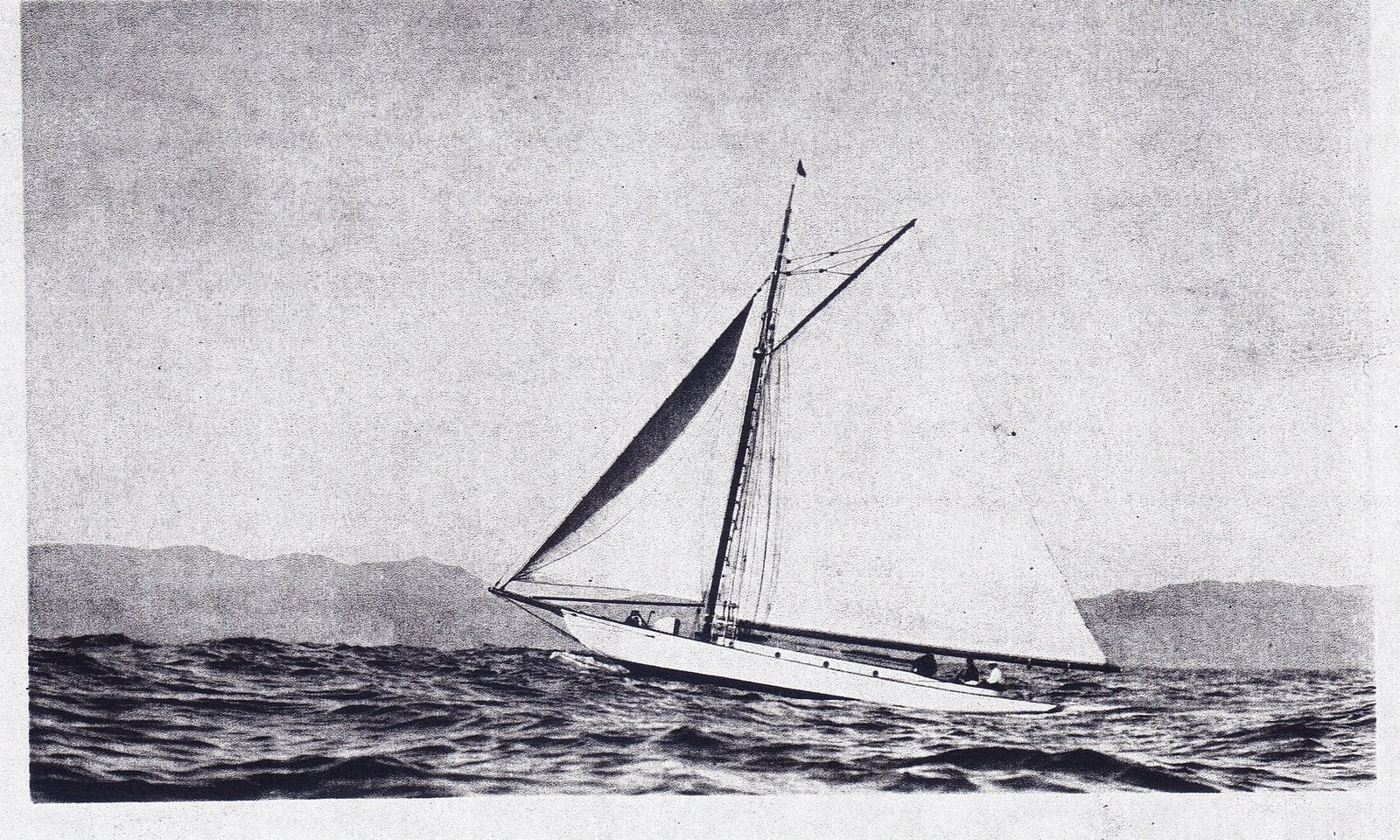
The Stone family built boats on San Francisco Bay from 1853 to 2004, over three generations and at five addresses. Their yards launched lumber schooners, tugs, Alaska traders, wartime minesweepers and some of the best-known yachts on the coast. No other Bay yard has a record as long. Yankee is the oldest Stone-built vessel still on the Bay.
The sailing yachts that were both drawn and built on this Bay before the First World War, and that still exist, can be counted on one hand. One is a sloop of 1885 that still sails. One is a small craft in a museum collection. Yankee is the only one of her size, the only schooner among them, and the only one that has won an ocean race.
This matters beyond one boat. San Francisco Bay produced its own designers, its own yards and its own classes: the Bird in the 1920s, the Bear in the 1930s, the Farallone Clipper after that. The tradition kept boats and very little paper. Yankee's original lines plan has not been found, and her shape is known from a single later copy. What we know of the tradition's early years survives mainly in the hulls, and she is the largest of them.
Built in the timber of this coast
Pacific builders worked in Douglas fir from the forests of the Northwest: fir planking, fir decks and fir spars, over white oak frames. Yankee is fir on white oak with a cast-iron keel, which were the standard materials of the coast. Builders here used more wood than their eastern counterparts and expected to renew it.
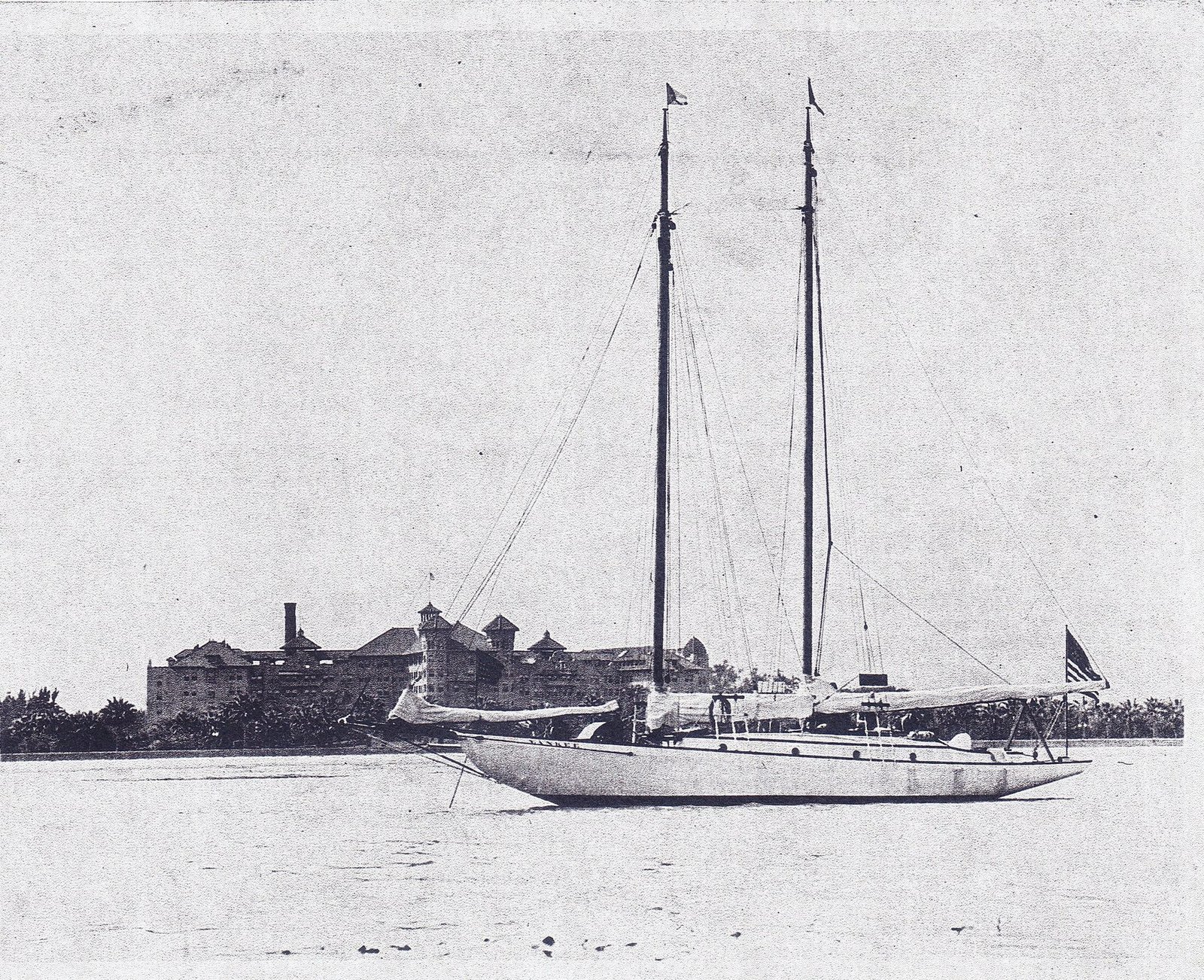
She has been renewed before. She was launched as a sloop and given her schooner rig in the 1910s. Her history includes substantial repairs in most decades since. The work of the 1990s and of the 2010s was overseen by Dickie Del Fino at Paul Kaplan's boatyard in Point Richmond. Her survival has always depended on people renewing her, and the rebuild we propose uses the same timbers and the same methods as the yard that built her.
A fast boat, and a modern one for her day
Yankee was built for an owner who wanted a boat that could win on this Bay. The summer westerly comes through the Golden Gate at fifteen to thirty knots most afternoons and sets up a short, steep chop against the ebb. Boats drawn for gentler water find that hard going. Yankee was drawn for it.
Her shape follows the San Francisco sloops of her time, a type worked out on this Bay over the previous twenty years: broad, shallow and powerful. On a waterline of thirty-six feet she carries about fifteen feet of beam and draws under six feet. Beam gave her the power to stand up to her sail in a breeze that would overpower a narrower boat, and a centerboard could be lowered another four feet for sailing to windward. She set her sail as a sloop then, on one mast, with a main boom that reached eight feet beyond the stern.
She was also a modern boat for 1906. She is fifty-two and a half feet on deck on that thirty-six foot waterline, so nearly a third of her length is overhang at bow and stern. That was how the fastest yachts of the day were drawn. The hull is short on the water when upright and lengthens as she heels, and a longer hull is a faster one.
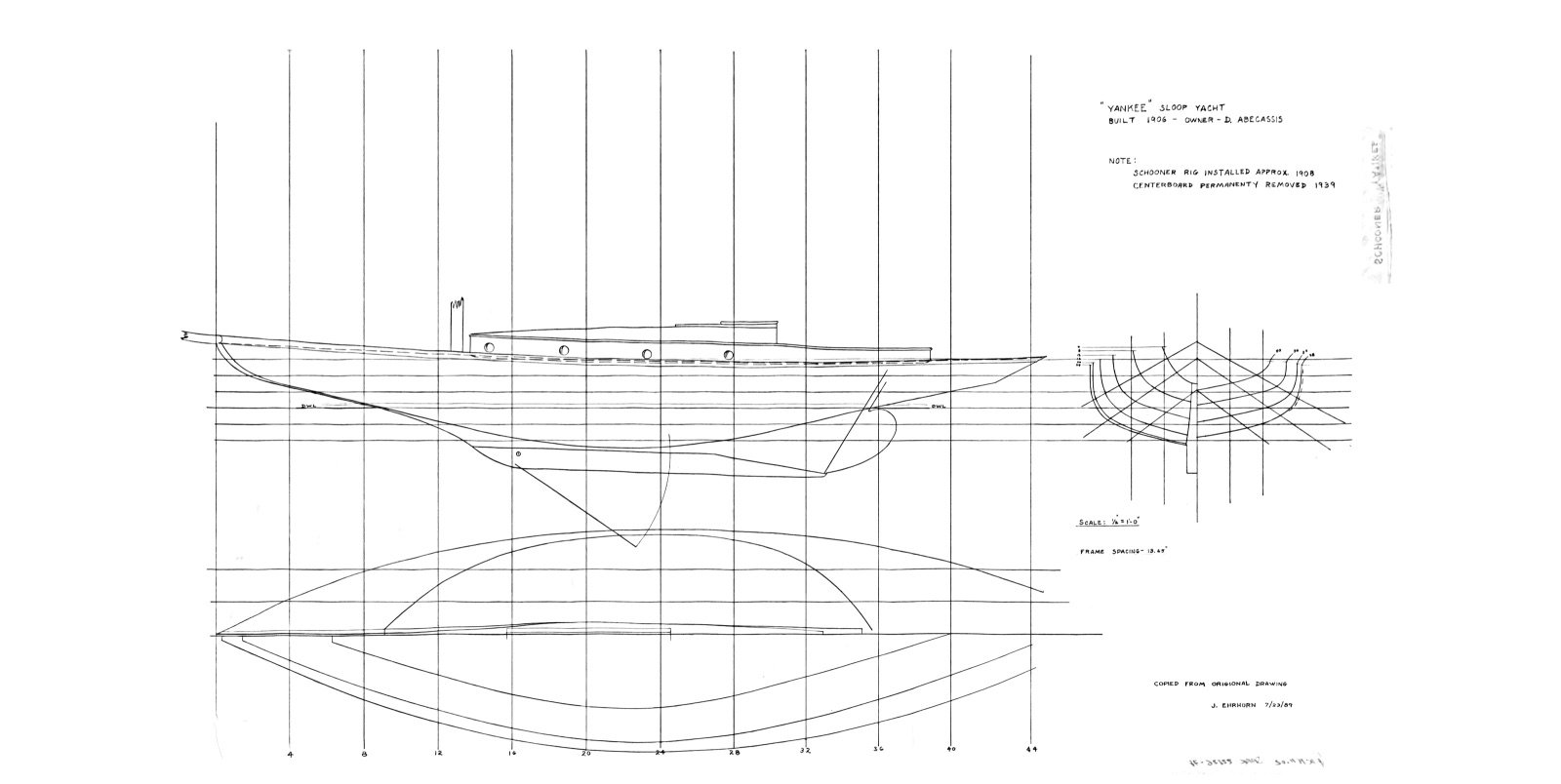
We have studied her shape from the one drawing of it known to survive, a copy made in 1989 from an earlier original and now held by the San Francisco Maritime National Historical Park. It is titled as a sloop yacht built in 1906. It shows a rounded forefoot, round-bilged sections and the centerboard lowered through a long keel. It is a research record and not yet a drawing to build from, which is one reason the rebuild includes measuring the hull itself.
Her rig asks as much of a crew now as it did then. She carries a large gaff rig and has never had a winch aboard. Her crew handles her by hand and has to work together to do it.
She was fast enough to prove the point at once. She won her first race, the Admission Day regatta of September 1906, with the fastest time on the course. In 1907 she won the first Farallones race, the first ocean race sailed out of the Golden Gate.
A hundred and twenty years of use
The earthquake of April 1906 threw her from her building cradle when she was nearly complete. She was launched that spring and was racing by September. In the hundred and twenty years since, she has had three private owners before passing into nonprofit care. From around 1925 one extended family, the Fords and their relations, sailed and maintained her through five generations. They are the longest line of caretakers she has had, and her care came to the Foundation from within that family. The Foundation's published history tells that story in full. What follows is the part of it that explains why she is known and cared about on this Bay.
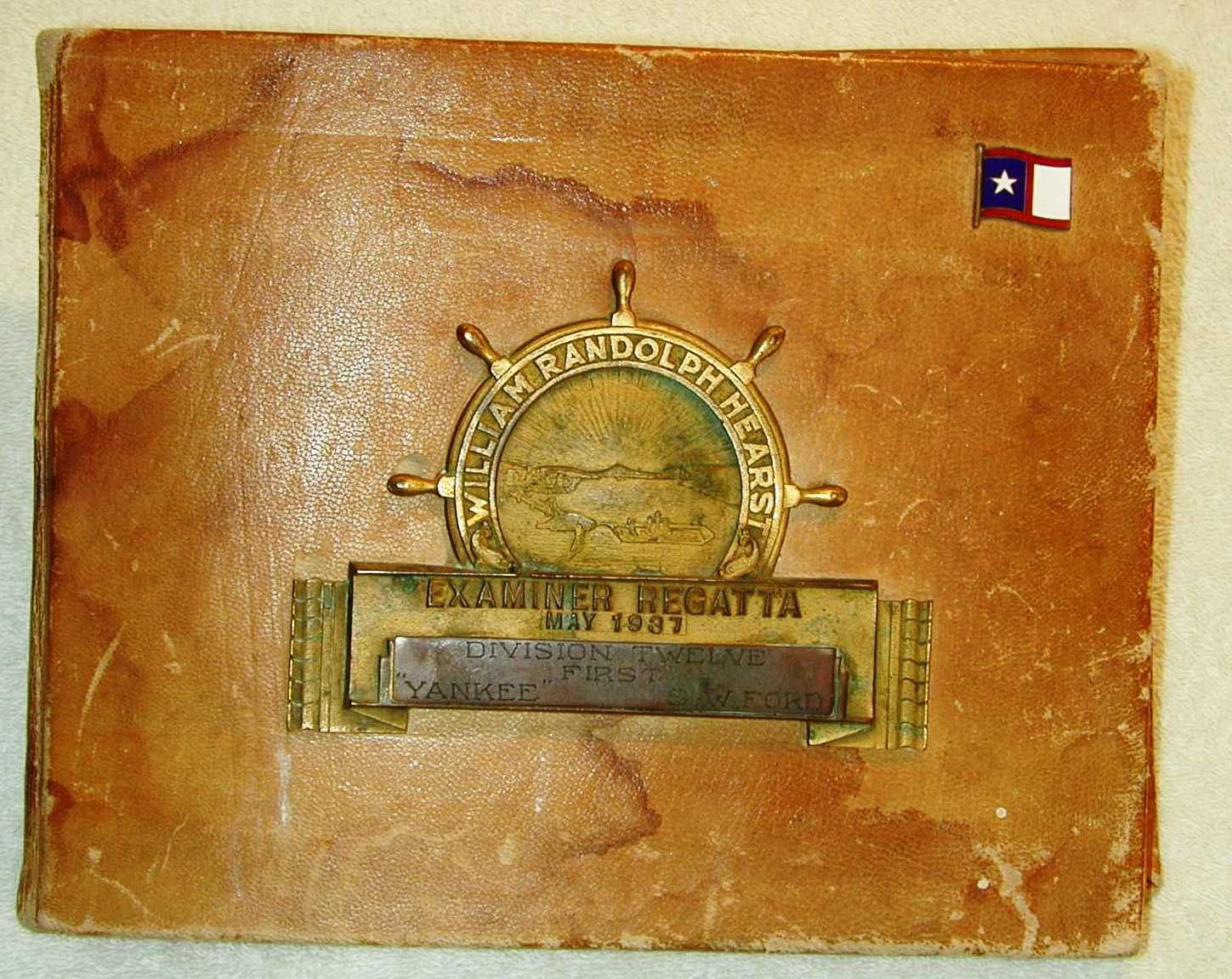
A racing record across a century. She first raced under the burgee of the Corinthian Yacht Club, and won its Hammersmith Trophy in 1910. She took part in the events of both of San Francisco's world's fairs. At the Panama Pacific International Exposition of 1915 she won her division in the regatta, sailed off fairgrounds that had been built over the site of her builder's yard, and she was on the water again for the Golden Gate International Exposition of 1939. In 1937 she won her division of the Hearst Regatta, and the prize was the leather-bound logbook her crews then kept for sixty-one years. In 1957 the Examiner wrote of "the venerable Yankee, clicking smoothly for all of her 51 years." She has been a regular in the Master Mariners Regatta since the years after its revival in 1965, and she took its Billiken Trophy, for the fastest gaff-rigged vessel, in 2005 and again in 2015. In 2008 she won the gaff division of the first Great San Francisco Schooner Race.
The flagship of the St. Francis Yacht Club. The St. Francis Yacht Club was founded in 1927 on the ground where she was built, and her owners were among its founding generation. Five commodores of the club have come from the Ford family and its relations, across four generations, and she was the club's flagship in each of their years: 1942, 1943, 1951, 1952, 1972, 1989 and 2009. Her centennial was celebrated at the club in 2006.
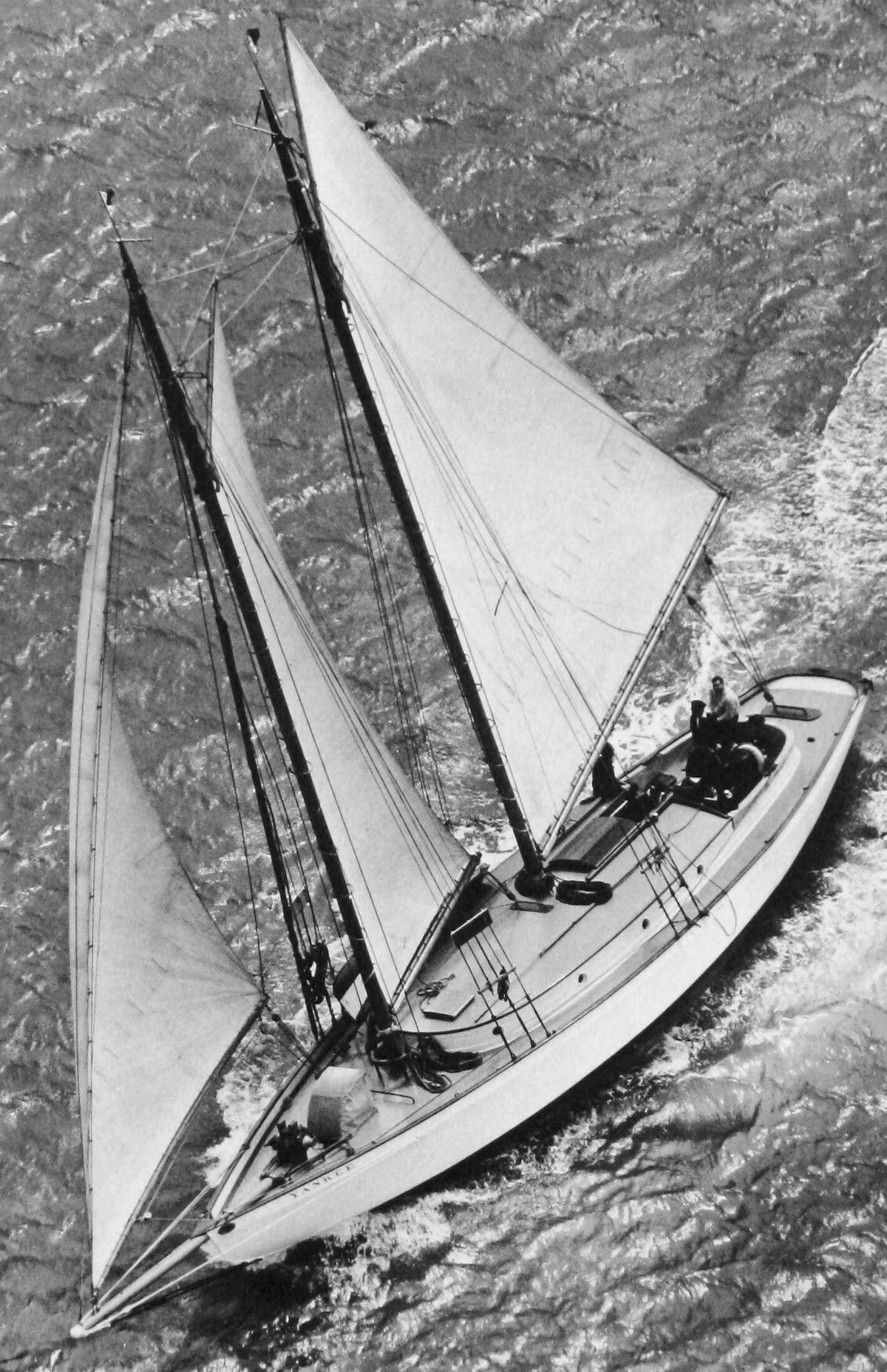
Eighty-five years in the yacht harbor. From the 1920s until 2012 she lay on the westernmost dock of the San Francisco yacht harbor, within a hundred yards of where she was launched. For most of a century she was one of the boats people saw when they walked the Marina, berthed among the best-known classic yachts on the Bay, with Santana, once Humphrey Bogart's, among her neighbours.
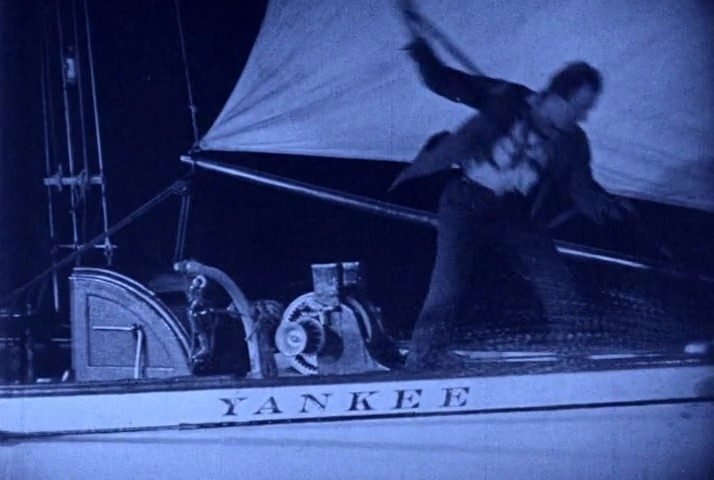
In the public eye. In 1923 she was chartered to Goldwyn Pictures for King Vidor's Wild Oranges, a film whose hero lives aboard his yacht. She is on screen throughout it. The American Film Institute's catalog records, from the trade press of 1923, that the yacht sequences were shot in San Francisco, at sea and in a staged storm off Pier 41. The film survives in a restored print. Her family also identifies her lying in her berth in the opening of Days of Wine and Roses, filmed at the Marina in 1962. By the family's account she was taken up for coastal patrol in 1942, painted gray and sent to watch the approaches to the Golden Gate. In 1989 Walter Cronkite sailed in her to Tinsley Island, and her log records it.
Honours and farewells. For her centennial in 2006 the City of San Francisco proclaimed a Yankee Day. She has also been the boat her people chose for their farewells. Between 1965 and 1998 her log records the ashes of family and crew committed to the sea from her deck, most often just inside the Golden Gate, with the log passed around afterward so that everyone aboard could write a line. In 1989 she carried a memorial party out to Point Bonita to toll eight bells for the sailor Tom Blackaller. One of her family died of leukemia in 1985, and her crew has since raced the Bay's Leukemia Cup in that memory. In 2014 Yankee was the regatta's top fundraising boat.
The company she has kept. She has sailed with and against many of the best-known classic yachts of this coast. Martha, launched from the same yard a year after her and now sailing from Port Townsend, was among the boats she beat to the Farallones in 1907. She has raced against the schooner Brigadoon and sailed alongside her many times. Her log has the two rafted together at Tinsley Island, and Brigadoon was among the boats she beat for the Jessica Cup at the St. Francis Yacht Club in 2011. In 2012 she raced in the first classic division of the Leukemia Cup with Dorade, Santana and Yucca.
Her record is unusually full. Her leather-bound logbook runs from 1937 to 1998. With it came photographs, correspondence and several thousand archive files, which we have sorted, transcribed and checked against outside sources. A boat with that much written history can be rebuilt with a clear account of what she was.
She has not sailed under her own rig since 2019. Putting that right is the purpose of this proposal.
Bringing her in and making her safe
Before anything could be planned, Yankee had to be moved, gathered up and made safe. That work took most of 2026. Her previous caretakers helped provide the means for it, and other help is acknowledged below. The rebuild starts from it.
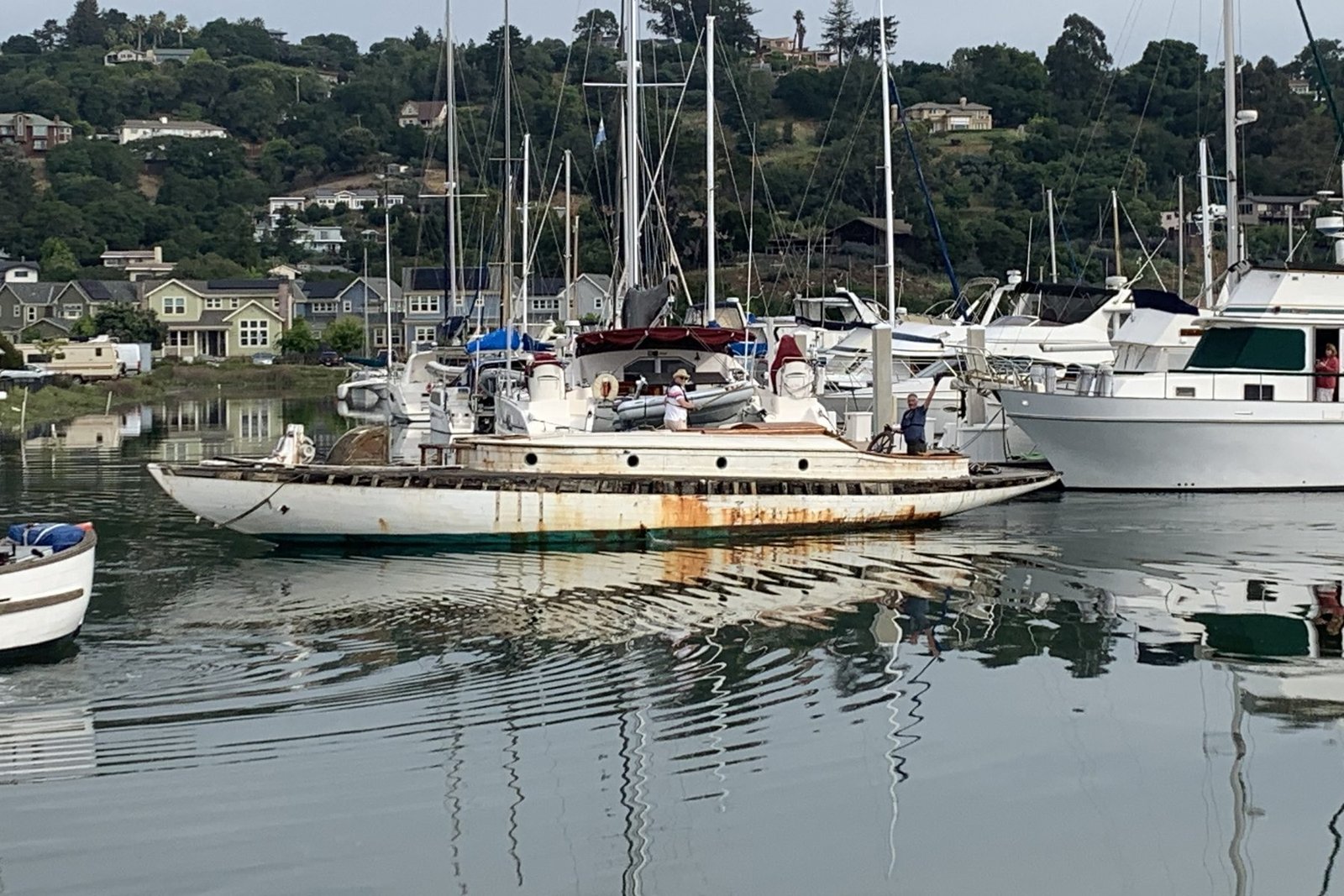
Ready for the crossing. She had been lying at a marina in San Rafael, without her rig. In March a diver went over her bottom at the berth, cleaned it and sealed what needed sealing, and she was cleared to move. She then crossed the Bay to Richardson Bay Boatworks in Sausalito.
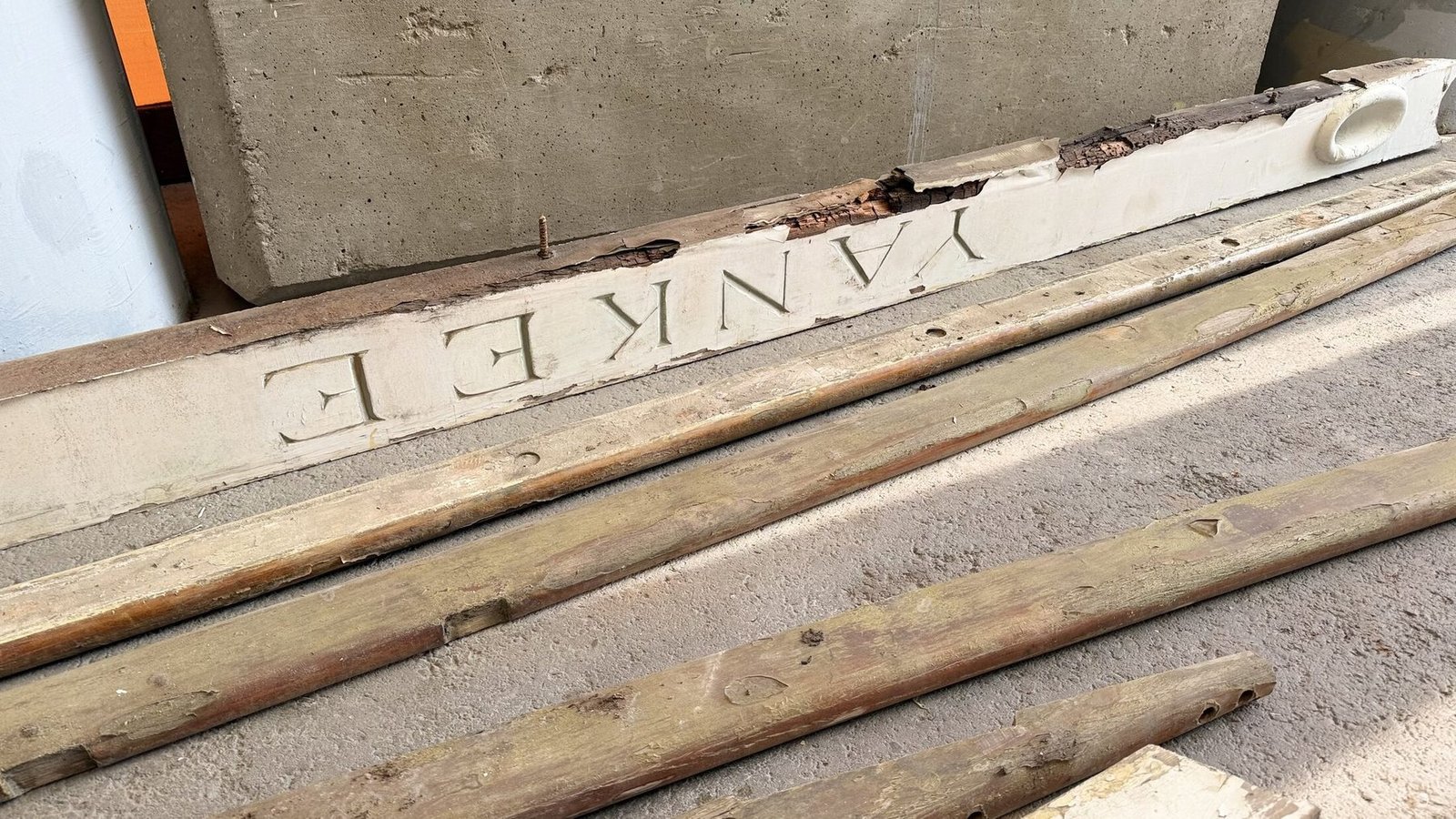
Gathered up. Over the spring and summer everything that belongs to her was collected. Her removed parts and her eight spars, two of them solid masts fifty-five feet long, came out of the boatyard in Point Richmond where her earlier work had been done. The members of Point San Pablo Yacht Club in Point Richmond took in her masts and spars for temporary storage, and we thank them for their help and their generosity. Her sails, standing rigging, covers and smaller gear, down to her silver cups, were brought out of paid storage and put under cover. By July nothing of hers was left in paid storage.
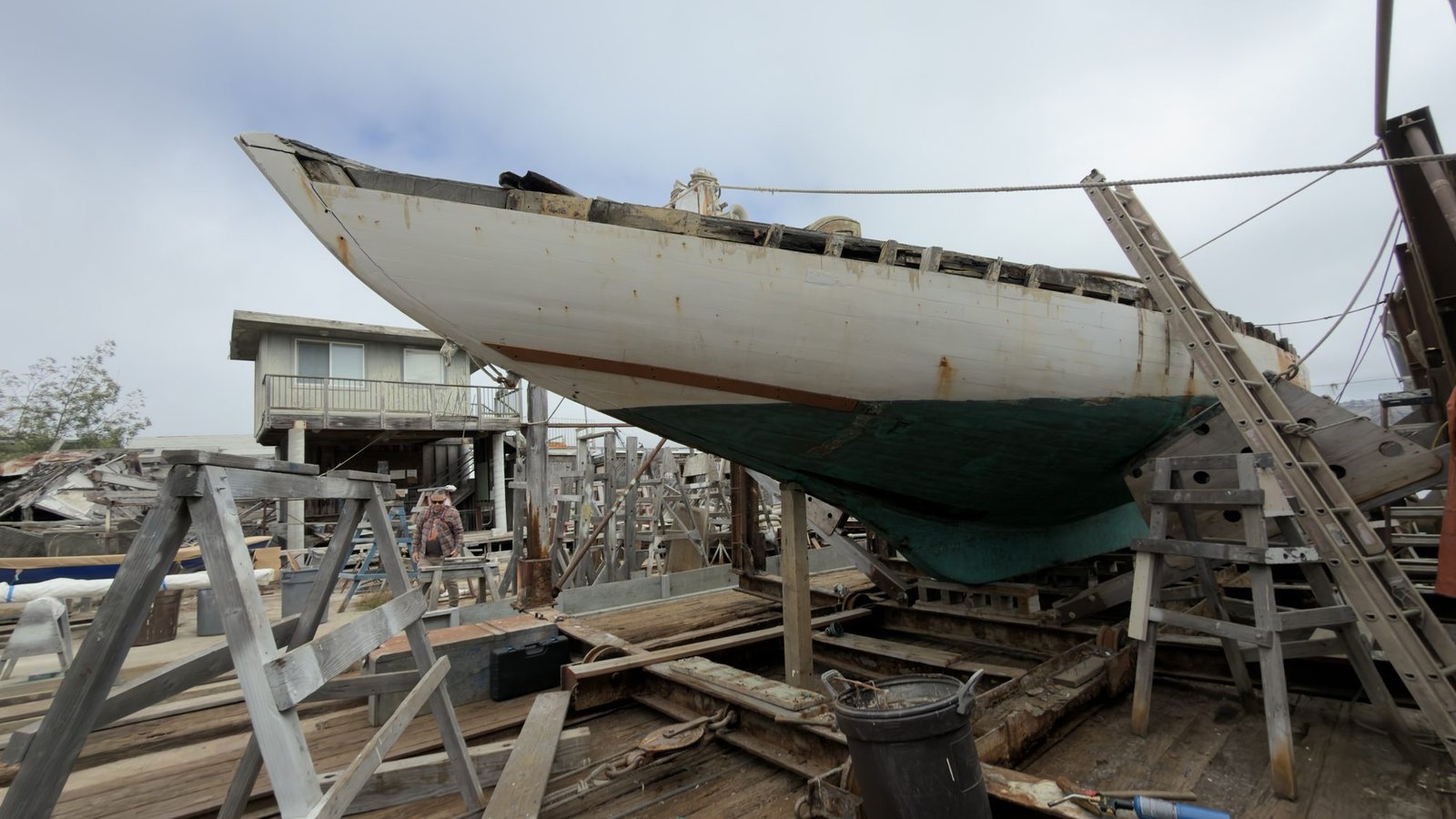
Hauled out. In August the yard hauled her on its ways and washed her down, so that the whole of her hull could be examined out of the water.
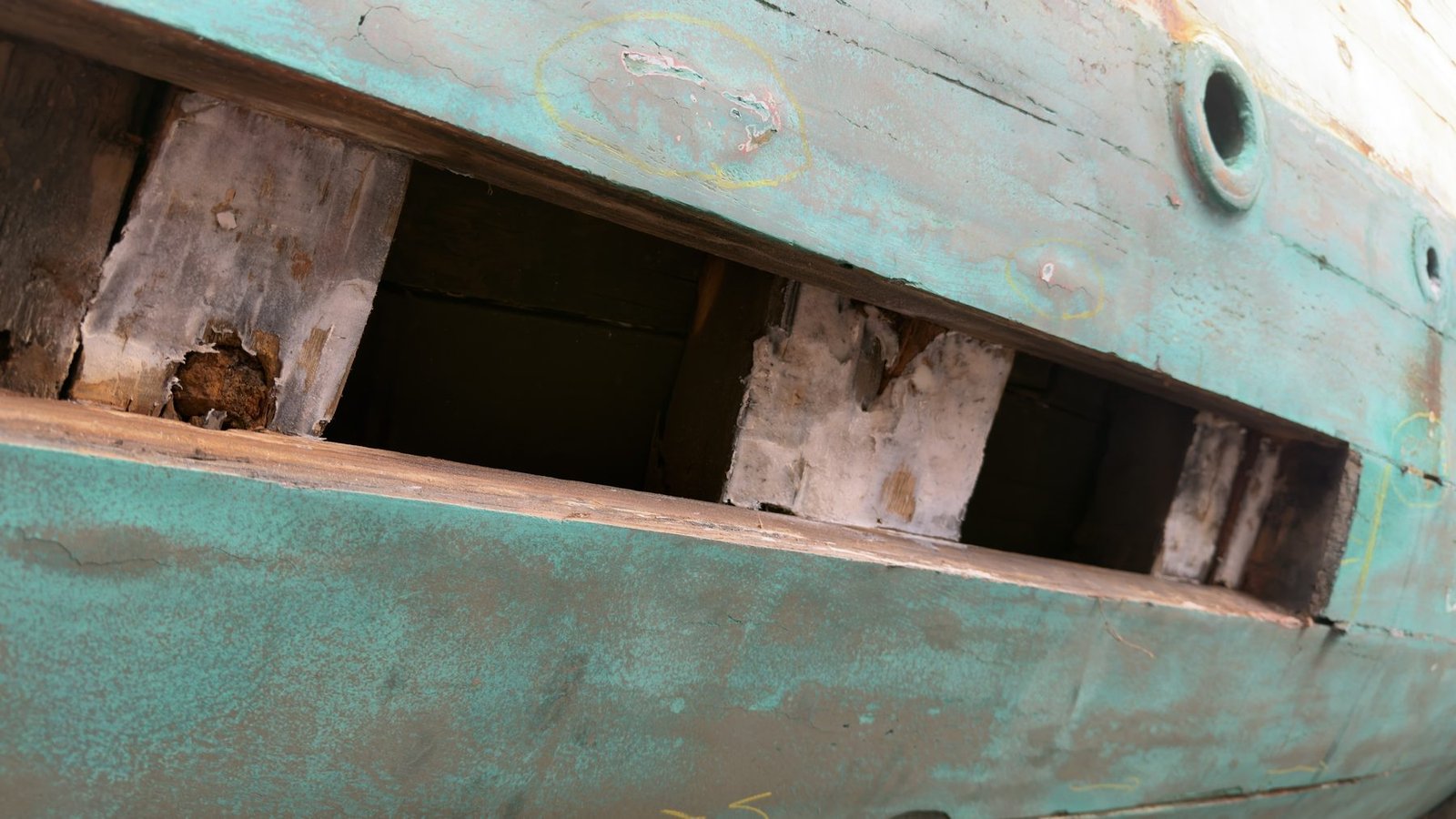
Opened up. Planks were taken off where they were rotten or worm-eaten, and near the keel and the stem so that the structure behind them could be seen. The shipwrights examined her timber closely and took the Foundation through what they found at the boat.
Made tight again. New planking was fitted where it was needed to close her up. The worst of the worm damage was repaired, her seams were attended to, and temporary shoring was fitted to support her stern. Her through-hull fittings were serviced and her zinc anodes were renewed.
Protected. Her bottom was carefully gone over and given new antifouling paint. Her topsides were gone over, cleaned up and sealed with fresh primer, and the varnish on her transom was resealed.
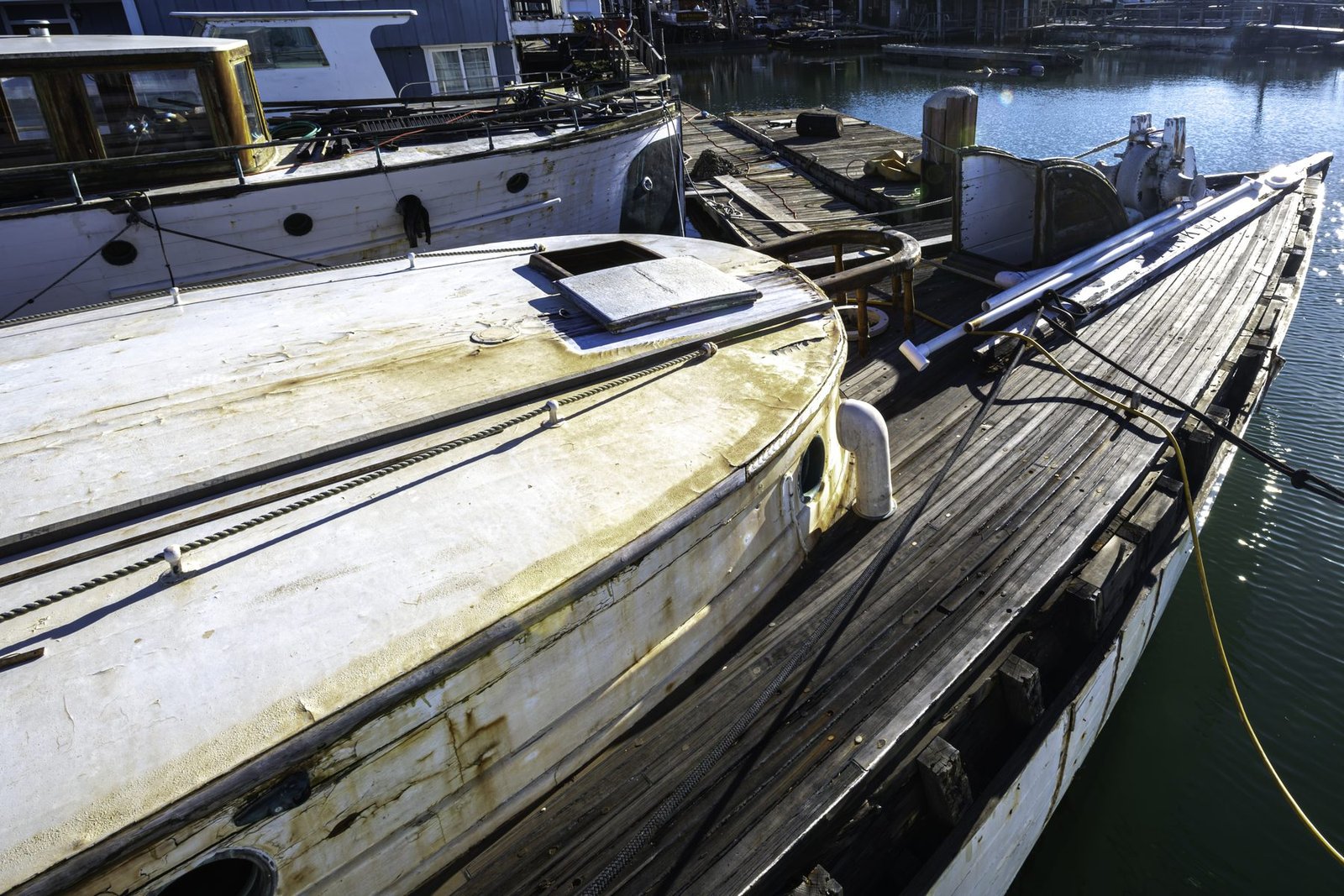
Afloat and under cover. She went back into the water in the autumn. She now lies afloat at the yard in Sausalito, covered for the winter.
This was not yet rebuilding. It kept her afloat and safe, it put the boat and everything that belongs to her in the Foundation's keeping, and it showed what condition she is in. The work was photographed as it went, and an account of it in pictures will follow this document.
Her condition today
A marine surveyor examined her in August alongside the yard's shipwrights. This is what they found.
The trouble is in the frames. Frames are the ribs of a wooden hull. The planking is fastened to them, and they are tied across the keel by timbers called floors. The upper ends of Yankee's frames, and her deck beams with them, have stood exposed to the weather and have deteriorated badly. The damage at the heads has gone far enough that the whole frame is beyond saving. Her original white oak frames cannot be restored, and every one will be replaced.
They have nonetheless done the work that matters most. Together with the laminated frames fitted beside them in the after part of the boat during an earlier refit, they have held the hull to its shape and kept the planking tight. That, with her sound keel and keelson, is why she can be rebuilt at all.
The forefoot, where the stem meets the keel, is decayed. The horn timber, which carries the long stern overhang, has sagged. The deck is failing and needs new deck beams and new deck planking, and the cockpit is beyond repair.
The yard's written assessment calls her not seaworthy and recommends almost an entire rebuild. The survey rates her restorable, recommends full restoration and rejects partial repair.
Her frames are beyond restoring, but they have held her shape. That is why she can be rebuilt.
What is sound
The keel, the keelson and the stem are sound. These are the backbone of the boat, the largest timbers in her and the hardest to replace. The hull is also still fair and true, which means she has kept the shape she was built to. Her worn frames, and the laminated frames beside them, have held her to it. That matters more than it may seem. A hull that has lost its shape has to be rebuilt from drawings, and no complete construction drawings of Yankee survive. A hull that has kept its shape is its own pattern. New frames can be bent to the form the planking still holds, and the boat that leaves the yard has the same lines as the one that went in.
What we already hold
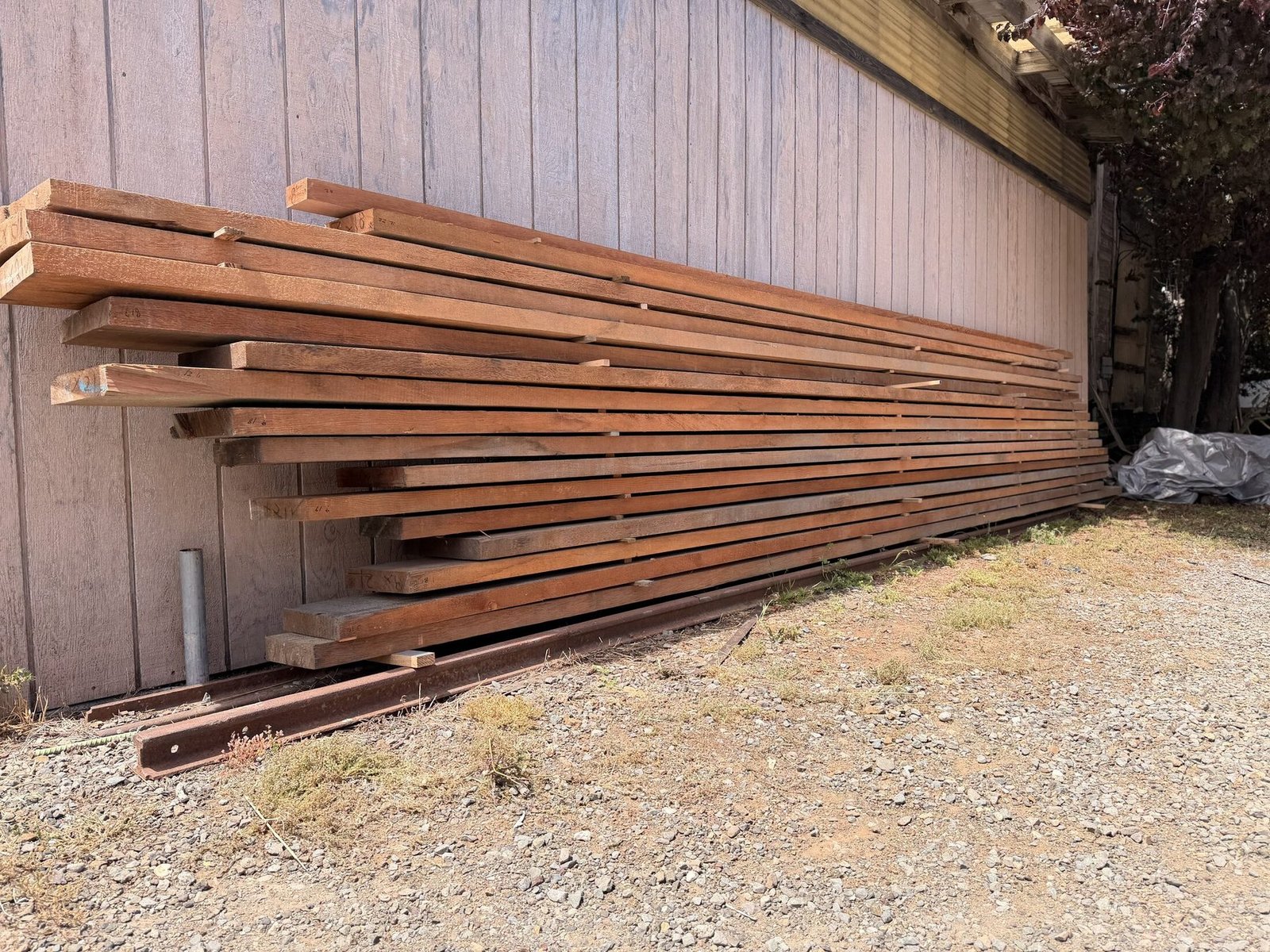
A good deal of the boat is finished and in store. We hold her two masts, five booms and bowsprit, a suit of North Sails in new condition, her standing and running rigging, canvas and safety gear, and the patterns and plans made over the years. We also hold more than 1,000 board feet of clear, air-dried Douglas fir. The rebuild is of the hull, the deck and the house. The rig that goes back into her already exists.
Why a rebuild, and not a repair
Some advisers have argued for doing the least that would let her sail, so that she is seen on the Bay while money is raised. We looked for that route and did not find it. Her frames are beyond restoring along the whole length of the boat, and the joint between frames, floors and keel has to be remade with them. The yard and the surveyor both reject partial repair in writing, and both call for a rebuild.
What we have taken from the argument is its sense of proportion. The rebuild keeps everything that is sound, and it puts sailing ahead of finish. Waiting is no answer either, because a boat in her condition does not improve by it.
The yard.
Where the work is done matters as much as how: why the rebuild belongs at Richardson Bay Boatworks, what it means for Sausalito's working waterfront at this moment, and why the Foundation is the right body to carry it.
The right yard
Richardson Bay Boatworks stands on the Marinship waterfront in Sausalito, a few miles across the Bay from where Yankee was built. It is a family-run yard that has worked there since 1986, and its trade is the repair, restoration and rebuilding of classic wooden boats. We propose that the rebuild is done there, by the yard's own boatwrights. There are six reasons.
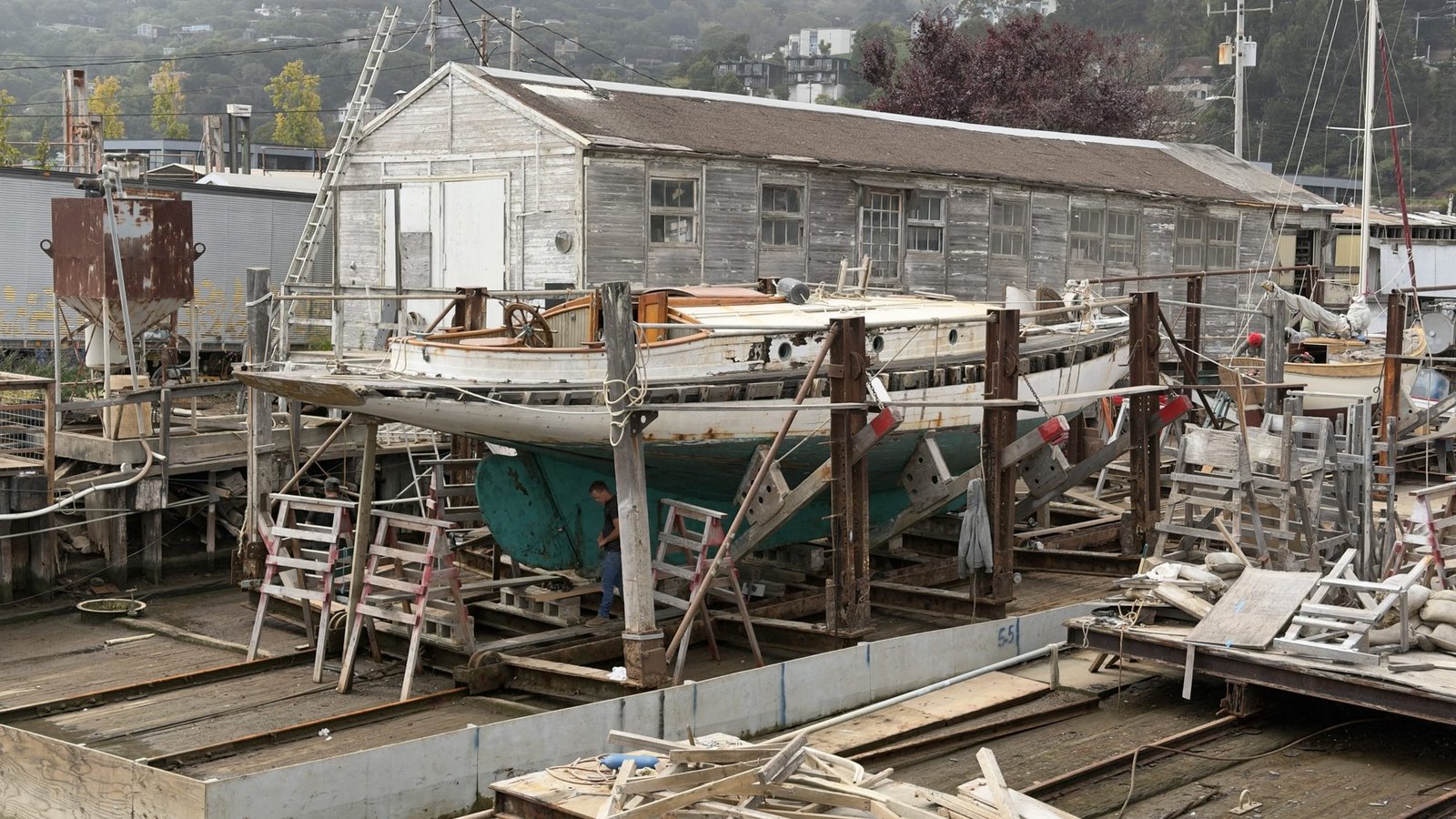
It knows this boat. Yankee has been at the yard since March. Its crew hauled her, opened her up and wrote the assessment this proposal rests on. No other yard could begin from that knowledge without doing the same work again.
It does this kind of work. The method the yard proposes is the one she was built by: white oak frames steamed and bent into the hull, tied to the keel with new floors, and planked over. This is the yard's ordinary trade, and it is not a common one any more. Between them, its shipwrights have rebuilt and maintained hundreds of classic wooden boats of every type and size.
Its people have rebuilt a boat like her. One of those boats is Freda, the sloop of 1885 that is the oldest active sailing yacht on the West Coast and, like Yankee, a boat of this Bay. Freda was rebuilt at Spaulding Marine Center and relaunched in 2014. Two of the shipwrights named below are part of her story: one worked on that rebuild, and another once lived aboard her. Spaulding Marine Center is the yard's next-door neighbour on the Marinship. The Foundation has no formal relationship with it, and the rebuild of Yankee is not a Spaulding project. The two share a waterfront and a trade and, over the years, many of the same hands, as neighbours on a working waterfront do.
It told us what we did not want to hear. The yard's assessment said she was not seaworthy and needed almost an entire rebuild, and it has not softened that since. A yard that will say so before the work begins is one whose word can be relied on during it.
It has the means. The yard can haul a boat of her size and has the room to work on her.
She is already there. A boat in her condition should travel as little as possible. Moving her to another yard, on this coast or another, would add risk and cost and would take the work away from the waterfront it belongs to.
This proposal was developed in long consultation with the yard, whose own written assessment calls for a rebuild. Method, crew and safe working practice are the yard's to decide.
The shipwrights
People who know wooden boats will ask who does the work. These are the shipwrights who have examined Yankee and advised on her rebuild. Who works on her at each stage is for the yard to decide.
- Andrew Sommer manages Richardson Bay Boatworks and runs its work day to day, and he will lead the rebuild of Yankee for the yard. He carried out most of the examination of her structure and wrote the yard's assessment, which is the ground this proposal stands on.
- Ross Sommer, his father, founded Richardson Bay Boatworks in 1986 and still advises on its work. He was consulted throughout the assessment of Yankee. He is the son of Harold Sommer, a Bay tugboat captain who famously restored the pilot schooner Wanderbird in Sausalito. Ross once lived aboard Freda when she was his family's boat, years before she was rebuilt at Spaulding Marine Center.
- Holden Crane is an independent Sausalito shipwright who works with the yard. A graduate of the Arques School and a former partner in North Bay Boatworks, he worked on the reconstruction of Freda, and with Andrew Sommer he carried out most of the examination of Yankee.
- Graham Wheelock is a boatwright at the yard and a graduate of the Arques School of Traditional Boatbuilding. He has worked on hundreds of wooden boats, and he was responsible for much of the work of stabilizing Yankee.
- Anton Hottner is a shipwright who was consulted on the assessment. He trained at the Arques School of Traditional Boatbuilding in 2002, co-founded North Bay Boatworks in Sausalito, and has repaired and restored wooden boats of every size for more than twenty years. He now runs the youth boatbuilding program at Rocking the Boat San Francisco.
A working waterfront, at a time that matters
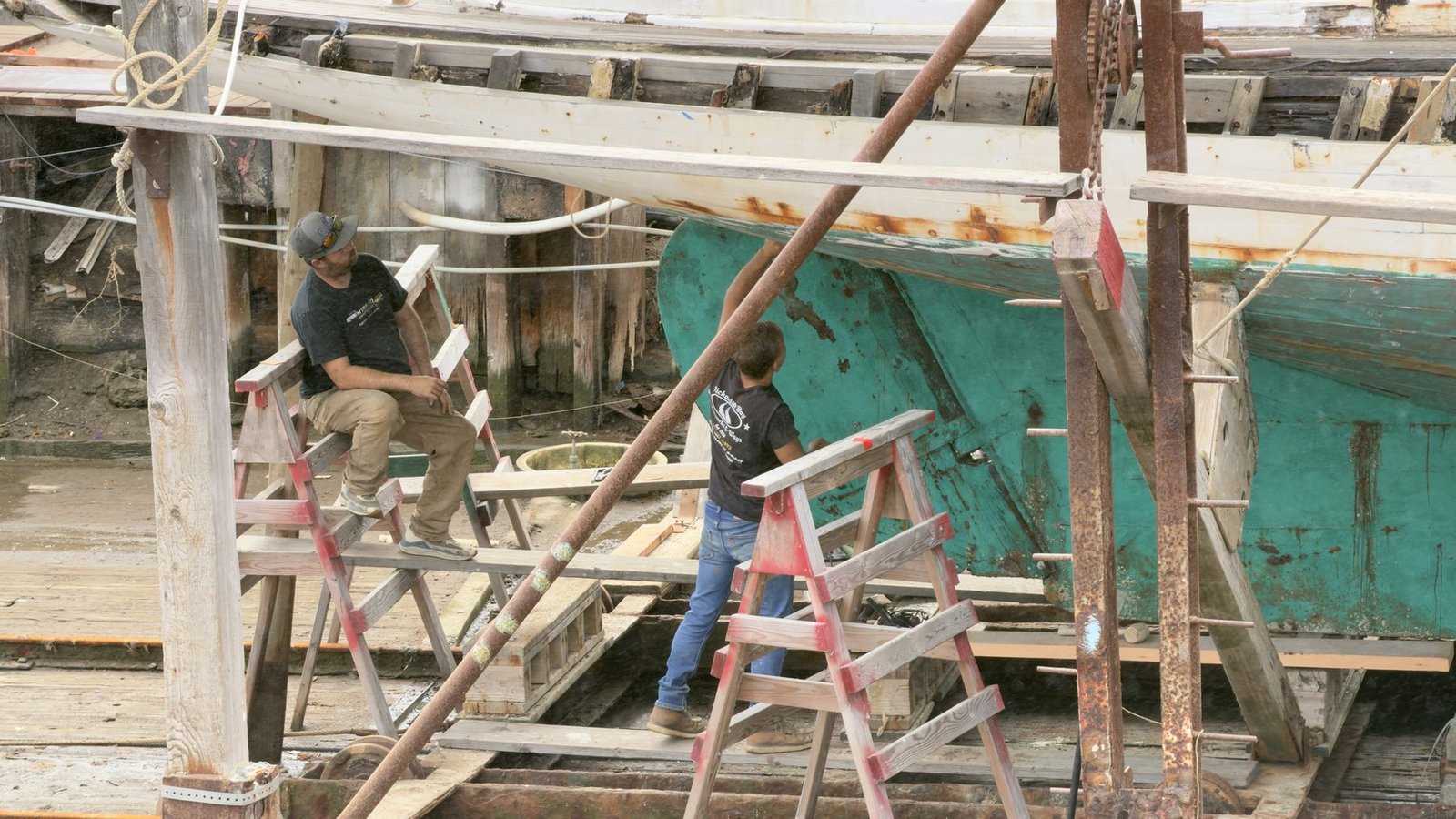
The Marinship was built in 1942 as a wartime shipyard, and in three and a half years it launched Liberty ships and tankers by the dozen. When the shipyard closed, the land and its buildings passed to boatbuilders, marine trades, artists and people living afloat. That is the Sausalito working waterfront of today: boatyards, sailmakers, riggers, machinists and independent shipwrights, with the Arques School of Traditional Boatbuilding and Spaulding Marine Center among them.
It is also where much of the Bay's own wooden fleet came from. The Bird boats, the oldest one-design class on the West Coast, were built in Sausalito by Madden and Lewis. The Bears were built there by the Nunes brothers from the early 1930s. Both classes still race, and the yards and shipwrights of the Marinship are a large part of the reason they can.
Since 1988 a city plan has reserved much of the Marinship for marine and industrial use. In November 2026 Sausalito's voters were asked, in Measure X, whether to repeal that plan and allow more intensive development there. The Foundation takes no position on ballot measures and took none on this one. We mention it because it shows where things stand. The pressure on this land does not come from one measure and will not end with one vote. Waterfront land is worth more to almost any other use than it is to a boatyard.
A working waterfront is kept by work.
Rules can reserve the land. They cannot supply the work, and a waterfront with yards but no work for them does not stay a working waterfront for long. What keeps a yard open is steady, skilled, paid work. What keeps a trade alive is a job long enough and demanding enough for experienced hands to teach newer ones. Steam-bending frames, fitting floors, hanging plank and laying a deck on a boat of this size are learned by doing them, beside someone who has done them before.
A rebuild of a fifty-two foot schooner of 1906 does not come along often. This one brings several years of that work to a Sausalito yard, done by paid boatwrights, in a place where people can come and see it, and recorded as it goes. It will not settle the future of the waterfront. It is a plain demonstration of what the waterfront is for, at a time when the town is deciding how much that is worth.
Telling the story
A rebuild like this is worth watching, and we mean it to be watched. Telling the story is a large part of the Foundation's work, alongside raising the money.
It begins with the website and its Logbook, a running account of the boat and the work, sent as a newsletter to anyone who asks for it. Social media carries the progress to a wider audience. Video follows the work at the yard: frames steamed and bent, planks hung, a deck laid, and the people who do it.
The subject is the work and the waterfront as much as the boat. We intend to bring attention to the craft itself and to the community that practices it: the yards, the shipwrights and the trades of the Marinship. Attention of that kind is useful to a working waterfront. It brings work to its yards and newcomers to its trades, and it leaves a public that knows what is done there.
Why the Foundation
A boat like this needs an owner that will outlast any one person's energy and means. For most of her life Yankee had that in a single extended family, the Fords and their relations, five generations of whom sailed and maintained her. The Golden Gate Wooden Boat Foundation was formed to take up that responsibility in a form that can carry on.
She is held for the public good. Yankee belongs to a nonprofit foundation. She cannot be sold for anyone's gain, and under the bylaws no decision to part with her can be made without the unanimous approval of the entire board.
The line of care is unbroken. The people who looked after her before the Foundation are still part of it, as Directors Emeriti and as advisers. What they know about the boat, her gear and her habits has been passed on in person.
We hold her record as well as her hull. The family archive has been sorted and catalogued. Her logbook has been transcribed. Her history has been checked against sources, and where a cherished story could not be confirmed we say so. Her spars, sails, rigging, patterns and timber are in our keeping.
She is rebuilt to be used. Yankee is not being restored as an exhibit. She survived because each generation rebuilt what it had to and kept sailing her. A gaff schooner worked without winches asks a crew to coordinate, pay attention and learn from one another. That experience exists only when the boat is sailing, and the aim is a schooner that sails and races regularly.
The Bay's own tradition. The Foundation was not formed for one boat. Its subject is the wooden boats that were designed and built on San Francisco Bay, and the yards, skills and people that keep them sailing. Its directors sail and maintain boats of the Bay's own classes. Yankee is the first and largest piece of that work, and the Birds and Bears and the people who race them are part of the same story.
Many hands. This is not a project that depends on one patron or one owner. It is meant to be carried by many people in amounts large and small, and it is arranged so that no single gift, and no single person, decides whether she is finished.
The Foundation is young and small, and its funds on hand are modest. The stages that follow are built around that fact, and they do not assume money we do not have.
She survived because each generation rebuilt what it had to and kept sailing her.
The rebuild.
What it means to rebuild Yankee, what will be done, and what she will be when the work is finished.
What we mean by a rebuild
The word covers a great deal, from a season's repairs to a new boat built in the name of an old one. This is what we mean by it.
It is more than a refit. A refit repairs and refinishes a boat that is sound underneath: paint and varnish, a few planks, new fastenings, and she sails again the next season. Yankee is well past that. Every frame in her has to be replaced, and so do her deck, her cockpit and her cabin house.
It is also not a new boat. Some well-known restorations have come close to one. The old boat is taken apart and built again from the keel up, with almost every timber made new and the old hull serving as the pattern. For a boat that has lost her backbone or her shape, that is the only way to save her.
Yankee needs something different. Her keel, keelson and stem are sound. They are the timbers Frank Stone's shipwrights laid at Harbor View in 1906, and they stay where they are. Her hull has kept the shape it was built to. So she will not be taken apart. She will be rebuilt from within, on her own backbone and inside her own shape. Worn timber comes out, and new timber goes in to the form the hull still holds.
She will be rebuilt from within, on her own backbone and inside her own shape.
The difference matters in two ways. Her hull is its own pattern, so the new structure takes the shape of the old without drawings, and no complete drawings of her survive. And the schooner that sails again will be the boat that was launched in 1906, renewed as each generation before us renewed her, with her record unbroken.
What will be done
To replace her frames the yard has to reach them, and that means opening the boat. Her interior comes out first. Her deck is failing and her cockpit is beyond repair, so they come off with the cabin house and are built new. With her structure open, this is the work.
- Every frame is replaced with new steam-bent white oak, and new floors tie the frames to the keel.
- The backbone is made good. The keel, the keelson and the stem are kept. The forefoot and the horn timber are replaced, and both mast steps are renewed.
- The hull is made tight. Her planking is renewed wherever it is no longer sound, which the yard will judge when it can see it from the inside.
- The deck and the cockpit are rebuilt on new deck beams, and the cabin house is rebuilt.
- She is brought up to date. Her engine, her wiring and plumbing and her safety gear are put right for a boat that will sail and race today.
- Her own rig goes back into her. Her spars, sails and rigging are finished and in store.
- She is measured and drawn while she is open, so that a full record of her shape and construction exists for the first time.
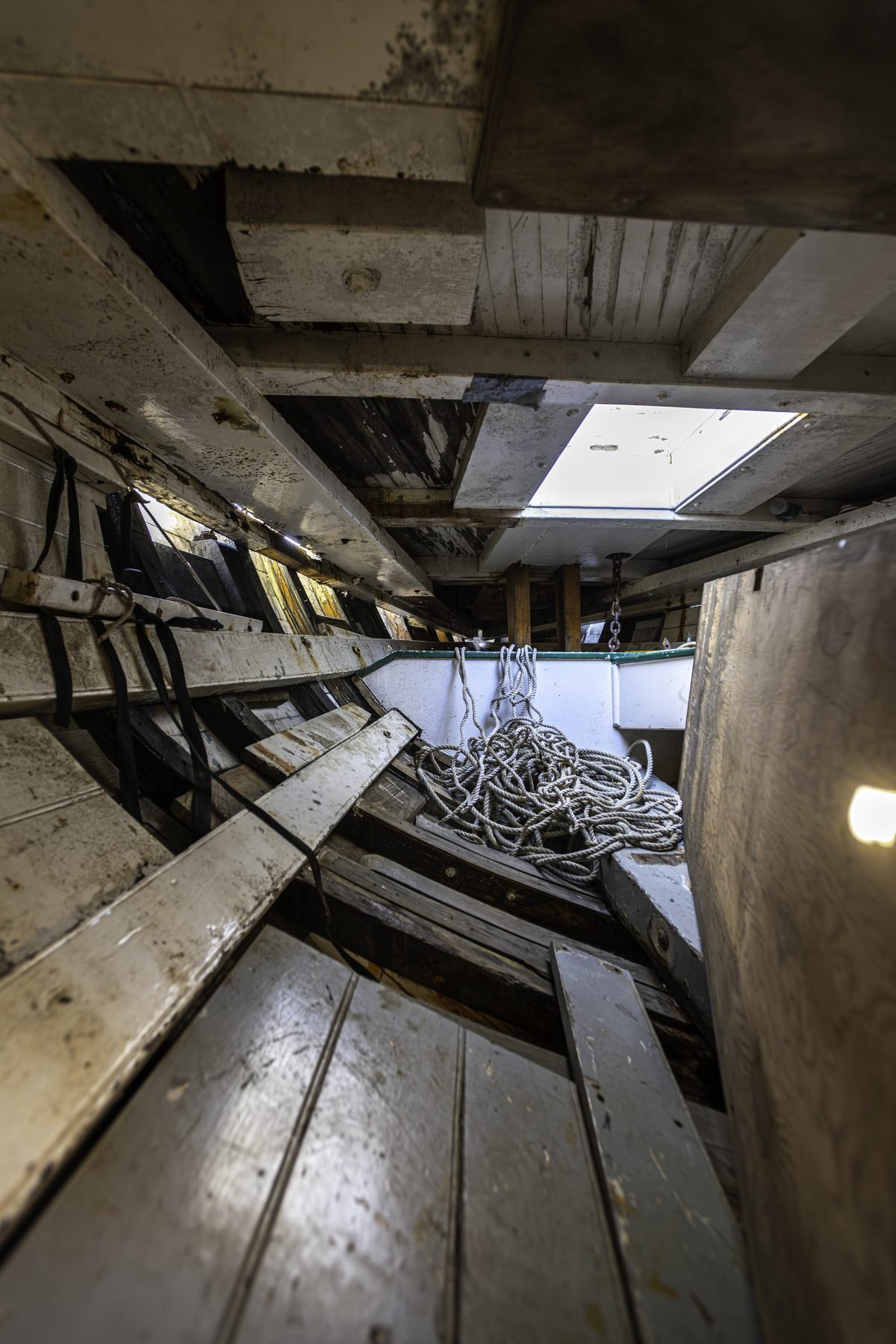
The work on her hull, deck and house is done by the yard's boatwrights, at Richardson Bay Boatworks.
What she will be
When the work is done she is the same schooner. She has the same lines and the same backbone, and she carries the gaff rig she has carried for more than a century. Under her planking she is new, with a structure able to carry that rig in the afternoon westerly for a long time to come. The aim is a boat that, looked after as she always has been, is good for another hundred years.
She comes out of the yard to go back to sailing and racing on the Bay.
How the work is decided
How the yard goes about this is the yard's to decide: the order of the work, where she lies while each part of it is done, and how many hands are on her. Those things will be adjusted as she is opened and as each stage shows more, and we will report them as they happen. They are the means, and they will change. The result set out above will not.
This proposal has been developed in long consultation with the yard, and it will be refined with the yard as each stage shows more.
The stages.
The rebuild is carried out and paid for one stage at a time. Each stage has a goal. When the goal is met, the stage begins.
One stage at a time
Most campaigns name one total and begin only if it is reached. This rebuild is carried out and paid for a stage at a time. Each stage is a piece of work the yard prices before it starts, with a result that can be seen and a safe place to stop at its end. A gift goes to work when its stage is funded. It does not wait for the whole rebuild to be.
When a stage's goal is met, that stage begins.
What is settled
Much about a project like this is uncertain at the start. These things are not.
- She is rebuilt in Sausalito, at Richardson Bay Boatworks, by the yard's boatwrights.
- Her structure is renewed in full. Every frame is replaced.
- Her backbone and her shape are kept. She is not taken apart.
- The first goal is $75,000, the minimum needed to begin.
- No stage begins until its cost is in hand. The Foundation does not borrow against the boat, and it does not count gifts it only hopes for.
- The board decides again before the structural work begins, with the yard's prices in front of it.
- Every stage is reported in one dated public account of what was done, what was found and what it cost.
The stages below are in the order we expect. The yard may divide the later ones differently as it learns more, and when it does we will publish the change. What each stage delivers does not change: a boat opened and understood, a sound backbone, new frames, a new deck and house, a launch and a first sail.
Stage 1. Open her up
- Goal
- $75,000
The work. Her interior comes out, labelled and stored. Her deck hardware is removed, recorded and photographed.
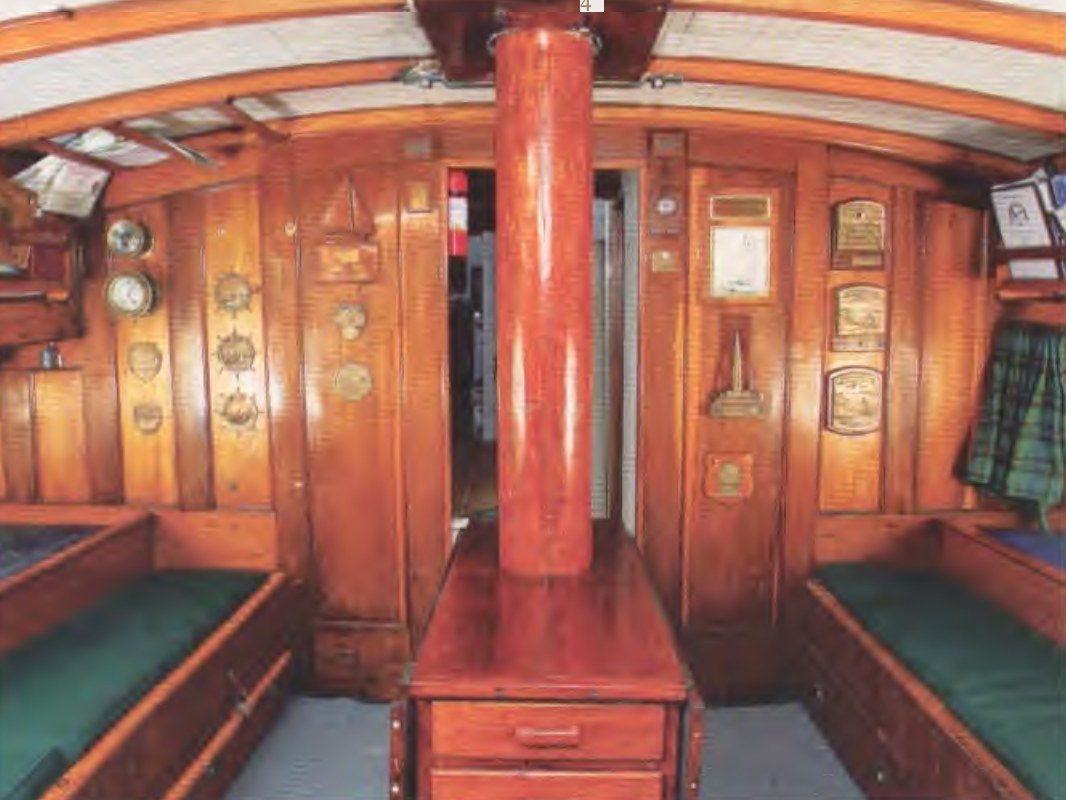
What it shows. With the interior out, the yard can see every frame, the floors, the backbone and the inside of the planking for the first time. Her shape can be measured for the drawings. The yard can then plan the structural work and price the next stage.
Where it leaves her. Safe, protected, open inside and fully recorded, with a priced next step. Nothing done in this stage has to be undone if the plan changes.
About the figure. $75,000 is the least it takes to begin. It is the Foundation's figure, drawn from the yard's August estimate, and it is confirmed when the yard prices the stage.
Stage 2. Backbone
- Goal
- Set when the yard has priced it, at the close of Stage 1
The forefoot and the horn timber are replaced, so that the new frames have a sound backbone to stand on from stem to stern. This is where the structural work begins, so it is the point at which the board decides again. It does not begin until its cost is in hand.
Stage 3. Frames and planking
- Goal
- Set with the yard, and met in steps
This is the heart of the rebuild and its longest stage. New steam-bent frames go in, new floors tie them to the keel, both mast steps are renewed, and the hull is planked and closed. The stage is funded in steps, each with its own goal. Each finished step is something a supporter can come and see: the new frames in place, and the old ones on the bench beside them.
Stage 4. Deck, cockpit and cabin house
- Goal
- Set with the yard
She is given a new deck on new deck beams and a new cockpit, and her cabin house is rebuilt.
Stage 5. Close-out and launch
- Goal
- Set with the yard
Her hull is faired, caulked and painted, and she is made ready for the water. At the end of this stage she is launched.
Stage 6. Rig, engine and first sail
- Goal
- Set when the stage is planned
Her spars are stepped, her rigging is set up and her sails are bent on. The engine goes in, with the systems she needs to sail safely. Then she sails. This is where the volunteer work begins in earnest: rigging her, refinishing her wood and renewing her interior, alongside professionals. The part on the crew says more.
Opportunities to reach further, sooner
The stages above are what it takes to make her sound and put her back under sail. Each step below goes further. Each is taken when the funds for it are in hand, by decision of the board and with the yard's agreement.
- Work without a pause. Stages funded ahead of time let the yard carry on from one to the next, and add hands if it chooses. She sails sooner, and less is lost to waiting and to rising prices.
- The cabin house in full. The house and doghouse finished in every detail before she is launched.
- A new engine and full systems.
- The interior before her first sail.
- A full technical record. A complete set of construction drawings and a naval architecture study of her hull, made with an academic partner.
These are the places where a larger commitment changes what is possible. We welcome a conversation with any supporter who wants to make one of them happen.
How the money works
Work is paid for before it starts. A stage begins when its cost is in hand. If the next stage is not funded when the current one closes, the work pauses at a point the yard agrees is safe, with the boat closed, covered and looked after, and it resumes when the goal is met. The Foundation does not borrow to keep it moving.
What a goal contains. A stage's goal is the yard's price for the work, the materials, and a reserve to keep her safe and cared for if there is a wait before the next stage.
Why only the first goal has a figure. Stage 1 is the only stage that can be priced today, because it is the only one that does not depend on what is found inside her. Each later goal is published when the yard has priced that stage and the board has approved it. For the same reason we publish no overall total. Anyone considering a significant commitment is welcome to go through our working figures with us in person.
How gifts are applied. Gifts are made to the Foundation for the rebuild and are applied to the current stage first. A gift that arrives after a goal is met carries forward to the next. Gifts in kind, such as timber, materials or professional services, are counted against the cost they replace. Before we ask anyone for a gift, the Foundation will set out in writing how gifts are held until a stage begins and what becomes of them if a stage does not go ahead.
What support is. Support for the rebuild is a tax-deductible gift to a nonprofit. It is not an investment, and it carries no financial return and no share in the boat. What it returns is a schooner sailing on the Bay, several years of skilled work on the Sausalito waterfront, a full public account of how the money was spent, and a lasting place in the boat herself.
Recognition. Gifts are recognized in the boat herself. Supporters' names will be engraved into her fabric, on parts such as a frame, a butt block, the keel or the bulwarks. Other benefits for supporters are being worked out and will be set out with the giving information. No name is published without the supporter's consent.
The crew.
The yard's shipwrights rebuild her structure. Finishing her, rigging her and sailing her is work for volunteers, and it has already begun.
Professional work first
While Yankee is in the yard for her structural work, the work is professional. It is done by the yard's shipwrights, and volunteers cannot work on her there. That is how a yard has to run, and it is how frames, planking and a deck ought to be built.
The structure is only part of a rebuild. Much of what follows it is work for willing hands, and there is a great deal of it.
The work for volunteers
- Renewing her interior. Her joinery comes out in the first stage and is stored. Cleaning it, repairing it, refinishing it and fitting it back into the new hull is a long job, done alongside professionals.
- Refinishing her wood. Her spars, rails and hatches are varnished, and all of it has to be stripped and built up again by hand.
- Rigging her. Her standing and running rigging are overhauled and set up, her spars are stepped and her sails are bent on.
- Sailing her. A gaff schooner without a winch aboard needs a large and practiced crew. Learning her, and teaching the hands who come next, is volunteer work that does not end.
- Everything around the boat. Research in her archive, photography and film, events, and telling her story.
Her first volunteers
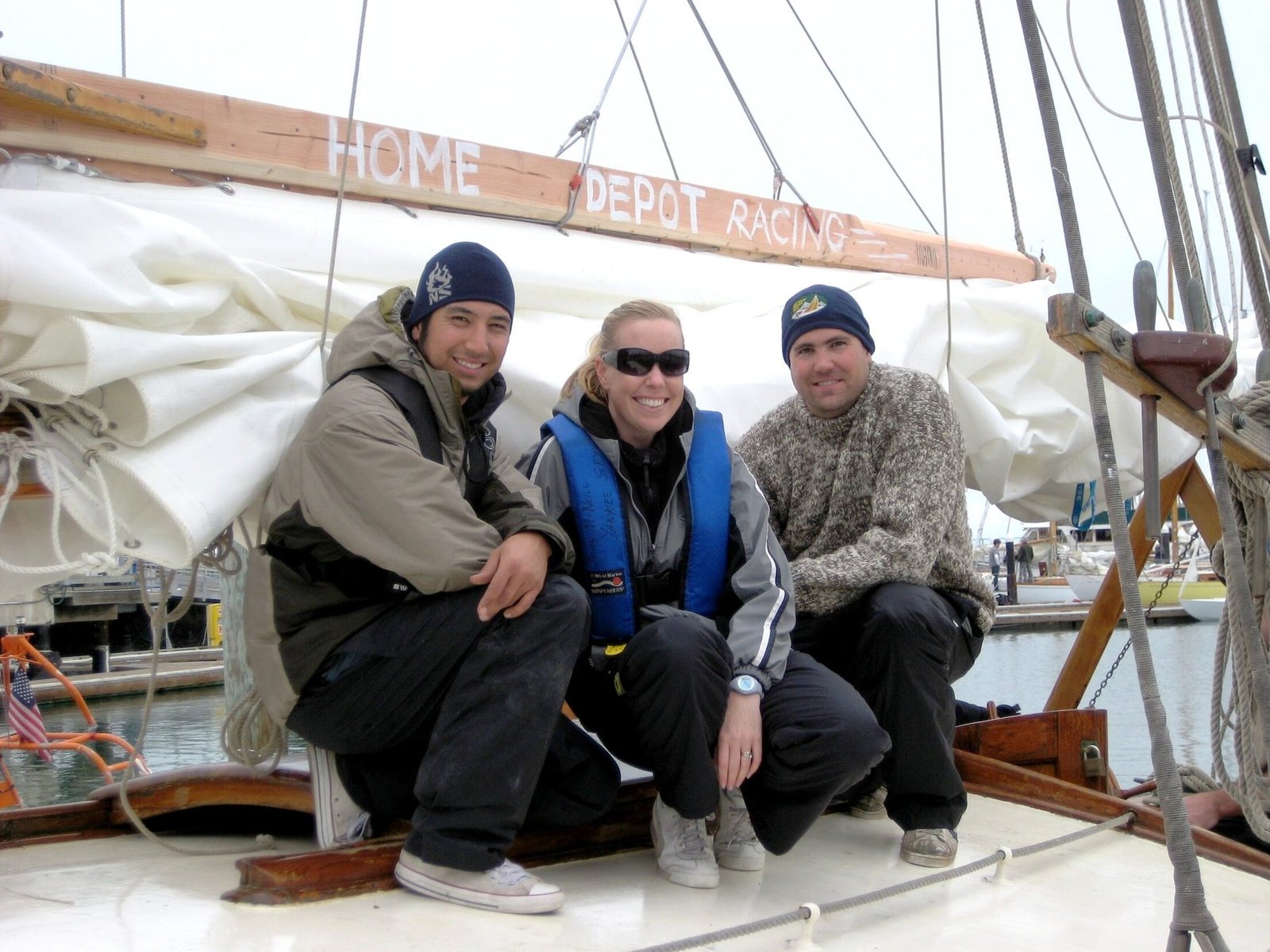
Volunteering for Yankee begins with the Foundation's board, who are her first volunteers. The gathering of her gear and the sorting of her record this year were their work, and they will be working on her alongside everyone who joins them.
Supporters at work
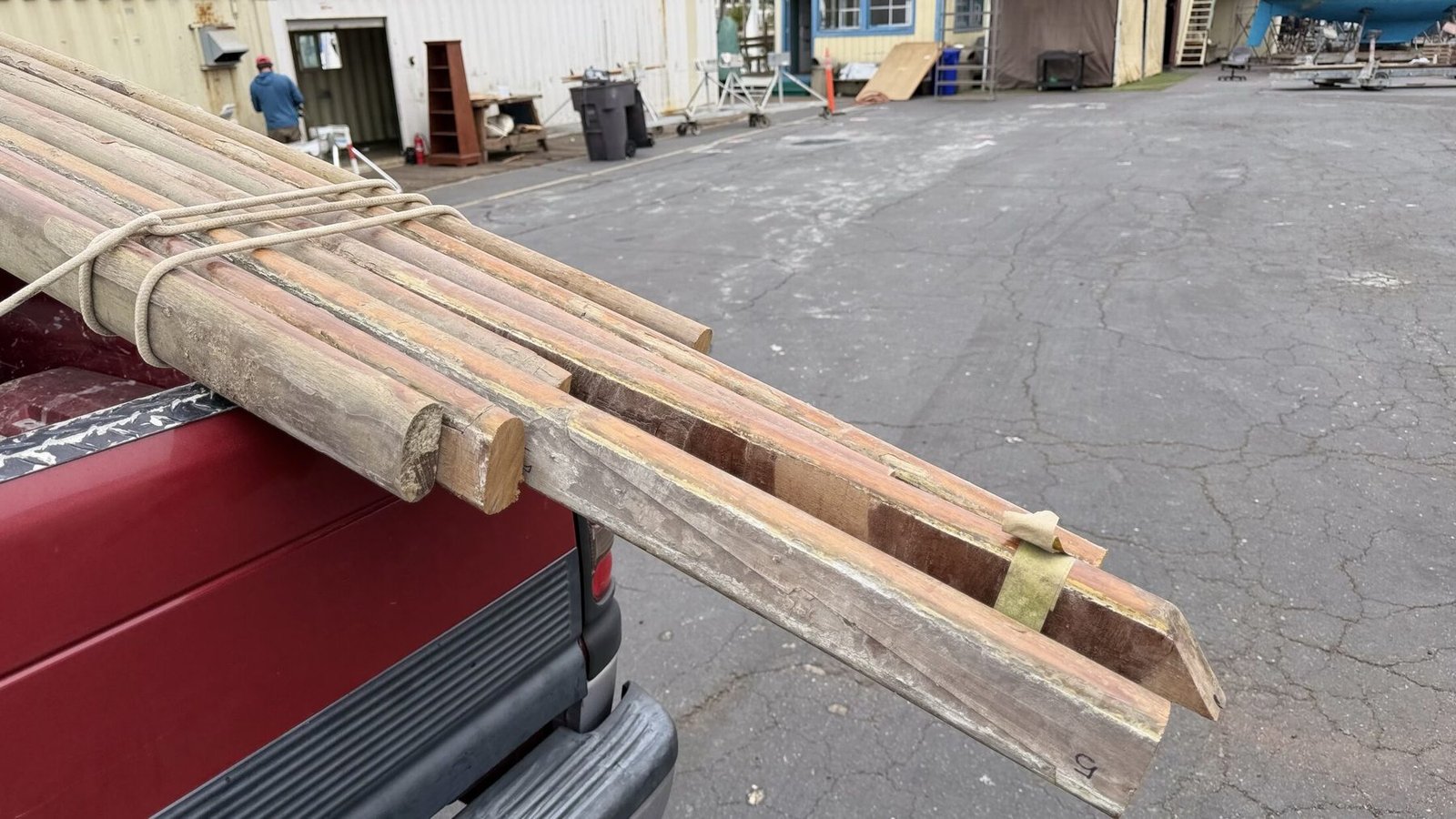
As the rebuild becomes known, we expect that many of the people who give to it will want to take part in the physical work as well. We welcome that, and we will make room for it. A name engraved in a frame is one way to be part of her. A day's work on her spars is another.
Joining
Volunteer work on the boat herself begins once the structural work allows it, and we will say when. The work around the boat is open now. Anyone who wants to volunteer or to crew can tell us through ggwbf.org, and we will keep the list and call on it.
The answers.
The questions we are asked most often, answered as plainly as we can. Then how the work is governed, what could go wrong, and how to take part.
Questions people ask
Is she being taken apart and built new? No. Her keel, keelson and stem are sound and stay where they are, and her hull has kept its shape. She is rebuilt from within, on her own backbone.
How much of the 1906 boat will be left? Her keel, keelson and stem, her bulkheads, her rudder, parts of her cabin house, and every plank that is sound. Most of her structure will be new. That is how wooden boats last. Yankee has been repaired and altered many times, and what has stayed constant is her shape, her record and her use. We will keep a full inventory of what is retained and what is replaced, and publish it.
Is she being put back to 1906? No. She was launched as a sloop and converted to a schooner in the 1910s. She is rebuilt as the gaff schooner she has been for more than a century, with the rig she already has.
Why not repair the worst of it and go sailing? Because her frames are beyond restoring along the whole length of the boat, and the yard and the surveyor both reject partial repair in writing.
What will the whole rebuild cost? We do not know yet, and we would be guessing if we named a figure. The first stage has a goal of $75,000. Each later stage gets a goal when the yard has priced it. Supporters considering a significant commitment can go through our working figures with us.
How long will it take? Years. How many depends on what the yard finds and on how steadily the goals are met. When stages are funded ahead of time the yard can carry on from one to the next, and she sails sooner. We give no completion date, and we will not until the yard can stand behind one.
What happens if the money stops? The work pauses at a safe point, with the boat closed and cared for, and it resumes when the next goal is met. No stage starts without its cost in hand, so a pause never leaves a stage half paid for.
Would another yard be cheaper? Perhaps, on paper. It would also mean moving a boat that should not be moved, starting again with people who have not seen inside her, and taking the work away from Sausalito.
Can I work on the boat? Yes, in time. The structural work at the yard is done by the yard's shipwrights. Renewing her interior, refinishing her wood, rigging her and sailing her will be a large volunteer effort, and the work around the boat is open now. The part on the crew says how to join.
Who owns her, and who decides? The Foundation owns her. Its board decides what is spent and when each stage starts. The yard decides how the work is done.
What happens after she is launched? She sails and races on the Bay, with capable crews and a wider circle sharing her care. A lasting result needs a suitable berth, dependable funds for maintenance, and people prepared to take responsibility in turn. Those arrangements are not settled yet. They will be, and published, well before she is launched.
Are gifts tax-deductible? Yes. Gifts to the Foundation are tax-deductible to the extent the law allows, and each is acknowledged in writing. We suggest confirming your own position with your adviser.
How will I know what my gift did? Every stage ends with a dated account of the work, with photographs, and the same account goes to everyone. Supporters are welcome to see the boat at the yard, by arrangement.
How the work is run
Who decides what. The Foundation's board holds authority over spending and over the start of each stage. The yard owns the method, the detail of the work and safe access to the boat. The Foundation's project lead coordinates between them and is responsible for the public account.
Agreements in writing. Each stage is covered by a written agreement with the yard that states the work, the price, where removed parts are stored and how the boat is insured.
One account. Each stage produces a written report, photographs with credits and, where possible, film. The same report goes to the board, to supporters, to the website and to the press. It records every part retained from the 1906 boat and every part renewed, with the reason.
A view from outside. The survey was made in consultation with the yard. The board is considering an independent opinion at two points: once her interior is out and her structure can be seen, and at the close of each later stage.
What could go wrong
A proposal that listed no risks would not deserve to be believed. These are the ones we see, and what we do about each.
More is found when she is opened. Stage 1 exists to find it early, including how much of her planking has to be renewed. Each later stage is priced from what the yard can see at the time.
The job takes too long, and prices rise. A long rebuild tests the patience of supporters and of a busy yard, and later work will cost what it costs then. Each step is reported as it is finished, and funds beyond the current goal go first to keeping the work moving.
Money comes slowly. The plan is built for it. Work pauses with the boat closed and safe, nothing is borrowed, and the structural work does not begin until the board has priced figures and confirmed funds in front of it.
The yard's time or site changes. The yard is busy, and the future of the Marinship is being argued over. Until the structural work begins she can be moved. We keep the plan and the drawings in a form another yard could take up, and we keep our relationships with other Sausalito yards and shipwrights.
Weather, loss or damage. She is kept covered, and insurance is confirmed before each stage begins.
Too much rests on too few people. The Foundation is small. The board is dividing responsibility for the treasury, the relationship with the yard and the review of what is published among its members, and the project is documented so that others can pick it up.
Taking part
The rebuild needs people in several ways, and all of them count.
- Give toward the current stage. The first goal is $75,000, for the work that opens her up and lets the yard plan and price the rest.
- Make a further step possible. A larger commitment can bring forward one of the opportunities to reach further. We would be glad to talk it through, with our working figures on the table.
- Give in kind. Timber, materials, tools, storage and professional services all reduce what has to be raised.
- Volunteer. There is work around the boat now, and work on her once the structure is done.
- Crew. She will need capable hands, and people willing to become them.
- Advise. Shipwrights, naval architects, surveyors, historians and people who have run projects like this one can save us from mistakes. We want to hear from them, especially where they disagree with us.
- Follow the story. Read the Logbook, take the newsletter and pass it on.
- Come and see her. She is at the yard in Sausalito, and visits can be arranged.
The Foundation can be reached through ggwbf.org.
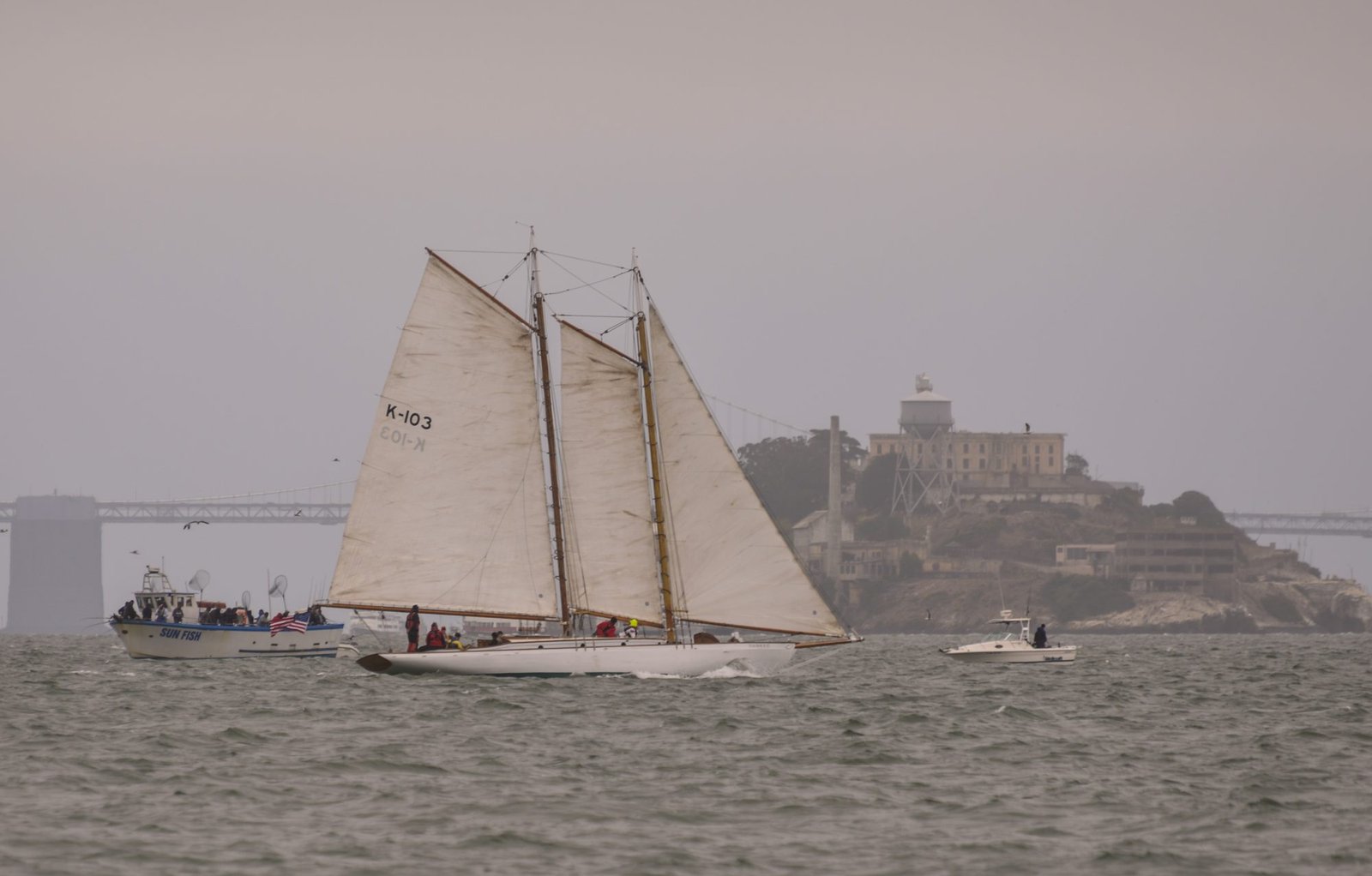
A boat that is known on the Bay is easier to keep there.