The Logbook.

The Logbook is our running account of the boat and the work. Each entry is dated, and the newest comes first. We send it by email to anyone who asks.

Afloat at the yard, under her winter cover.

Yankee lies afloat at Richardson Bay Boatworks in Sausalito, under her winter cover. Here is where she stands as the year ends.

In March she crossed the Bay from San Rafael to the yard. Over the spring and summer we gathered in everything that belongs to her: the parts that had been taken off her, her eight spars, her sails, her rigging and her smaller gear. By July nothing of hers was left in paid storage.

In August the yard hauled her on its ways, went through her hull and made her tight. She went back into the water in the autumn.

A good deal of the boat is finished and in store. We hold her two masts, her five booms and her bowsprit, a suit of North Sails in new condition, her rigging, and more than 1,000 board feet of clear, air-dried Douglas fir.

Next comes the first stage of the work at the yard, which opens her up so that the yard can plan and price everything that follows. Its goal is $75,000. The entry below this one says what that stage does.
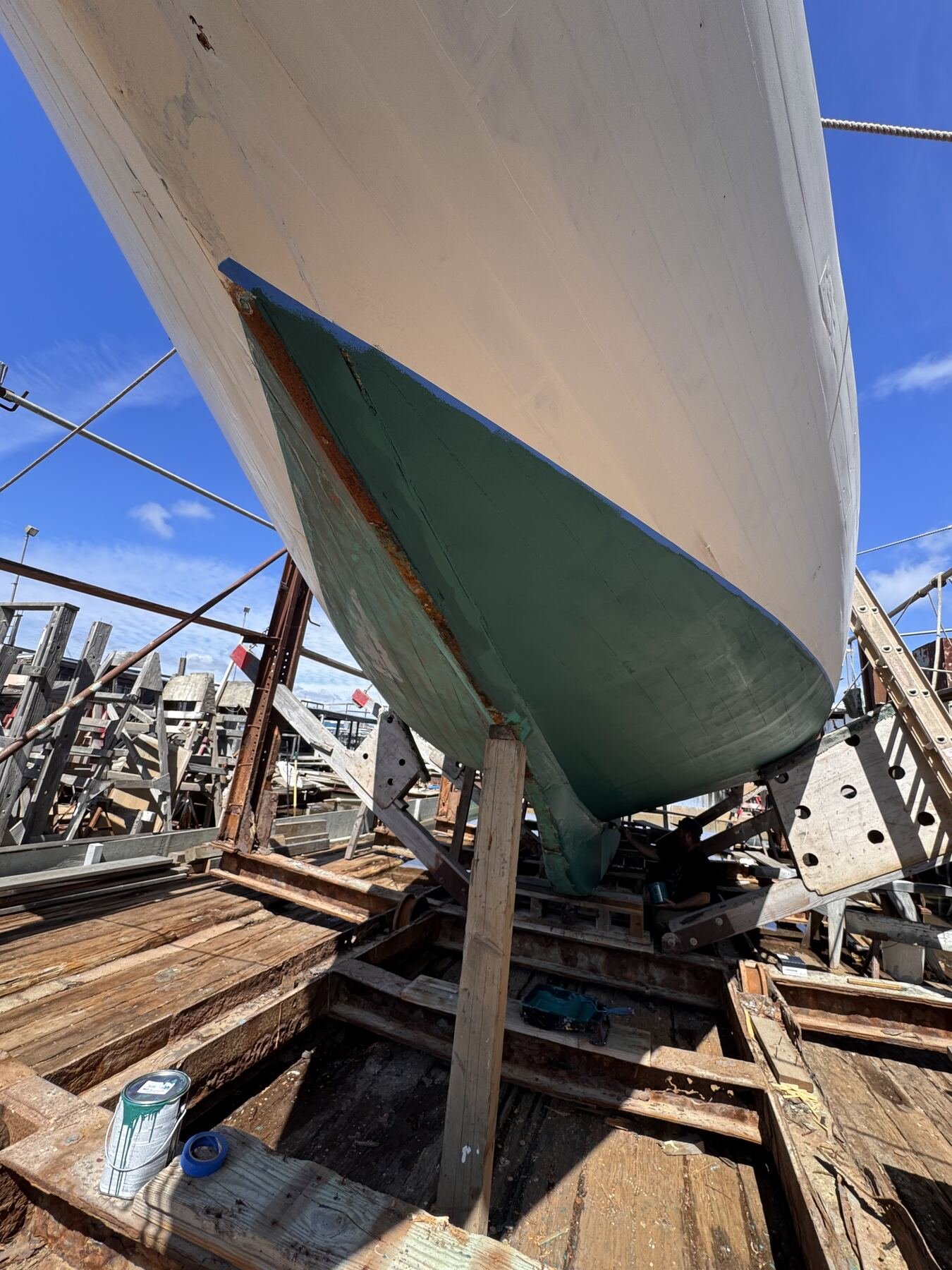
Yankee's hull seen from below on the ways, against a blue sky
Her hull from below, on the ways at Richardson Bay Boatworks, 2026.

The first stage opens her up.

The Golden Gate Wooden Boat Foundation has set out its plan for Yankee. The work is done in six stages and paid for one stage at a time, and the first has a goal of $75,000.

The aim is a sound schooner that sails and races on this Bay for another hundred years. Her white oak frames have held her hull to its shape and kept her planking tight, and that is why she can be rebuilt. Every one of them will be replaced with new white oak. She gets a new deck and a new cabin house, on the keel she was launched on and to the shape she has always had. It is more than a refit, and it is not a new boat.

The first stage is called Open her up. Her interior comes out, labelled and stored. Her deck hardware is removed, recorded and photographed.

With the interior out, the yard can see every frame, the floors, her backbone and the inside of her planking for the first time. Her shape can be measured and drawn. The yard can then plan the structural work and price the next stage. At the end of the first stage she is safe, protected, open inside and fully recorded.

Each stage begins when its cost is in hand.

Only the first stage has a figure today, because it is the only one that does not depend on what is found inside her. Later goals are published when the yard has priced them. Gifts are tax-deductible, every stage ends with a dated public account of what was done and what it cost, and supporters’ names will be engraved in the boat herself.

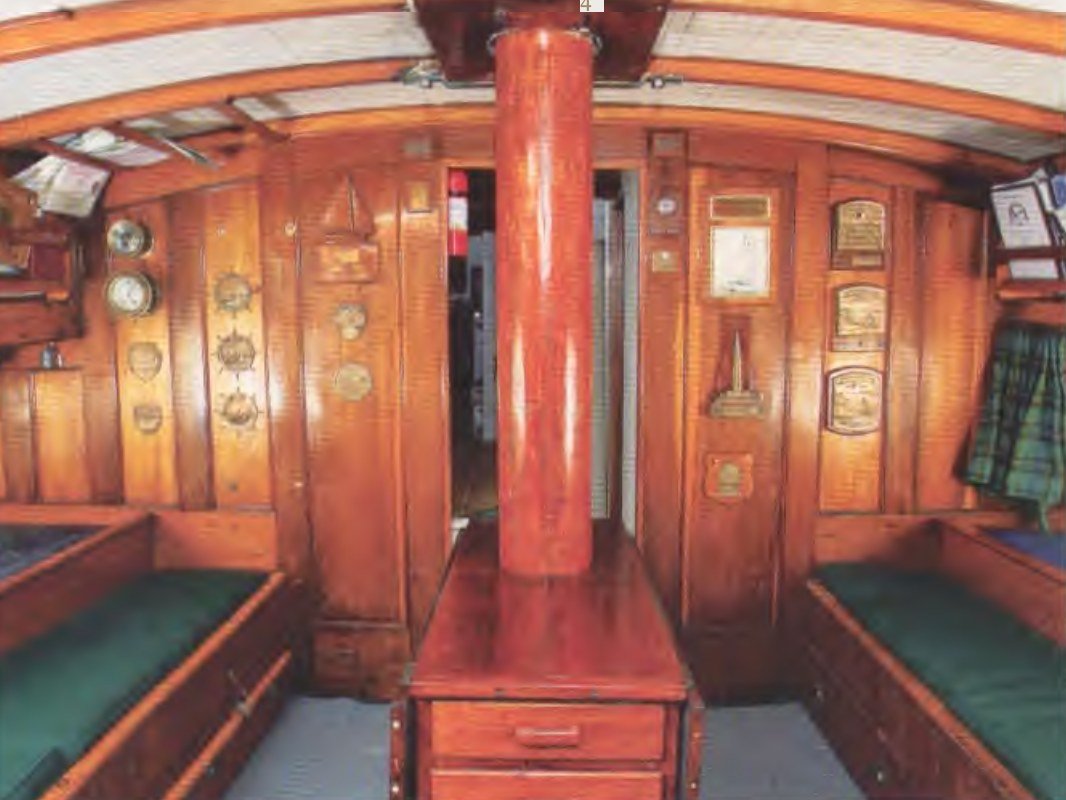
Yankee's varnished saloon, with the mainmast coming down through the cabin
Her saloon, with the mainmast stepped through the cabin. This is the interior that comes out, labelled and stored, in the first stage. Yankee Archive.

Where volunteers come in.

People ask whether they can work on the boat. The answer is yes, in time. The structural work at the yard is done by the yard’s shipwrights, and what follows it is work for willing hands.

There is a great deal of it. Her joinery comes out in the first stage and is stored. Cleaning it, repairing it, refinishing it and fitting it back into her is a long job, done alongside professionals. Her spars, rails and hatches are varnished, and all of that has to be stripped and built up again by hand. Her rigging has to be overhauled and set up, her spars stepped and her sails bent on.

Then she has to be sailed. She carries a large gaff rig and has never had a winch aboard, so she needs a large and practiced crew, and people willing to become one.

The work around the boat is open now: research in her archive, photography and film, events, and telling her story. Work on the boat herself begins once the structure allows it, and we will say when.

The Foundation’s board are her first volunteers. Gathering her gear and sorting her record this year was their work, and they will be working alongside everyone who joins them. We expect that many of the people who give to her will want to work on her too, and we will make room for that.

If you want to volunteer or to sail in her, tell us. We keep the list and we will call on it.

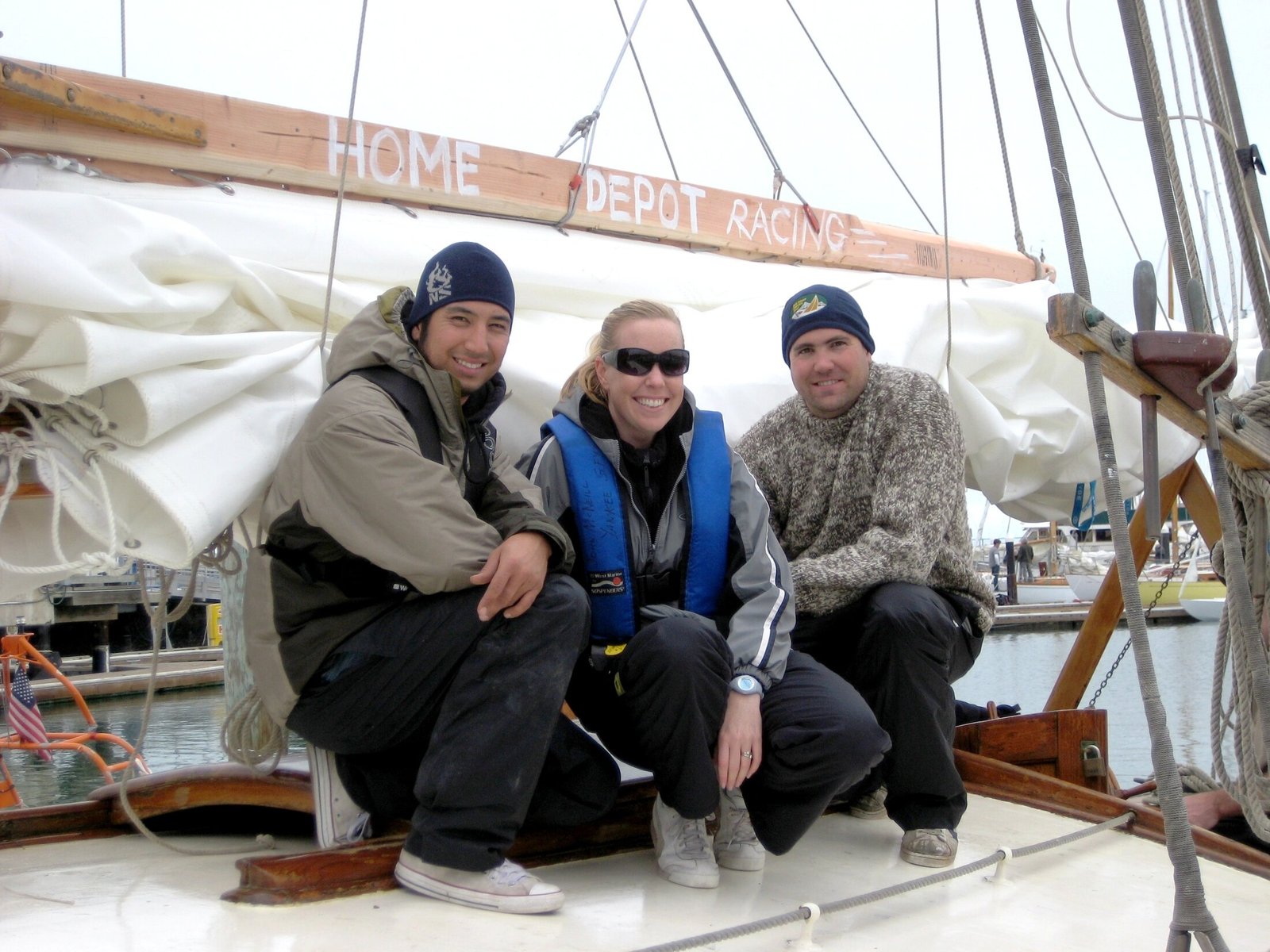
Three of Yankee's crew sitting under a gaff lettered Home Depot Racing
Her crew in 2008, under the “Home Depot Racing” main gaff they made overnight from hardware-store lumber after the original broke in the Jessica Cup. Yankee Archive.

Earlier entries, March to October 2026