Questions.
The questions we are asked most often about Yankee and the work, answered as plainly as we can. Then how the work is run, what could go wrong, and how to take part.
The boat and the work.
What is Yankee?
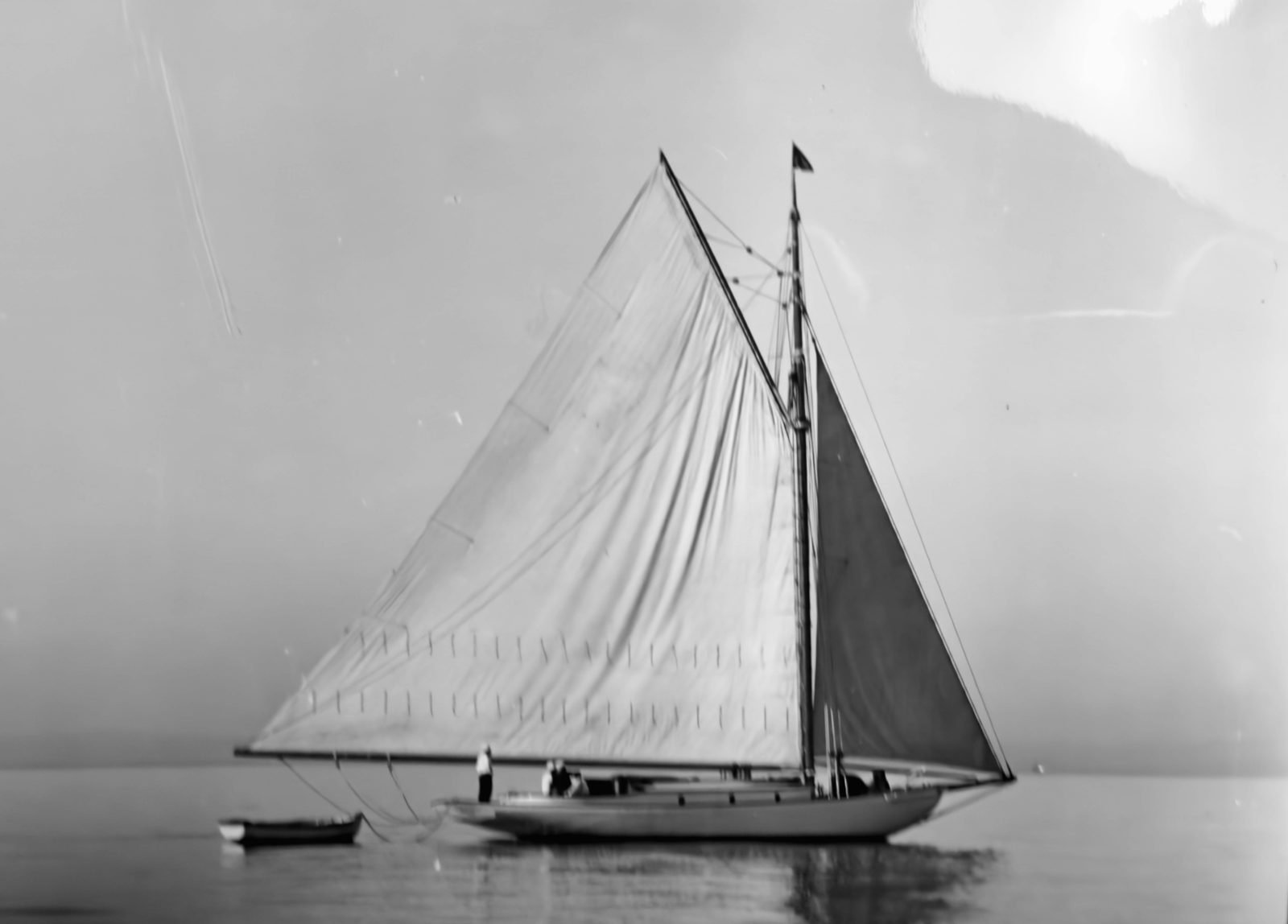
Yankee is a gaff schooner drawn and built at Frank Stone’s yard in San Francisco and launched in 1906. In 1907 she won the first ocean race sailed out of the Golden Gate strait, and she raced and cruised on the Bay for more than a century. She is the oldest Stone-built vessel still on the Bay. Her history tells it in full.
Where is she now?
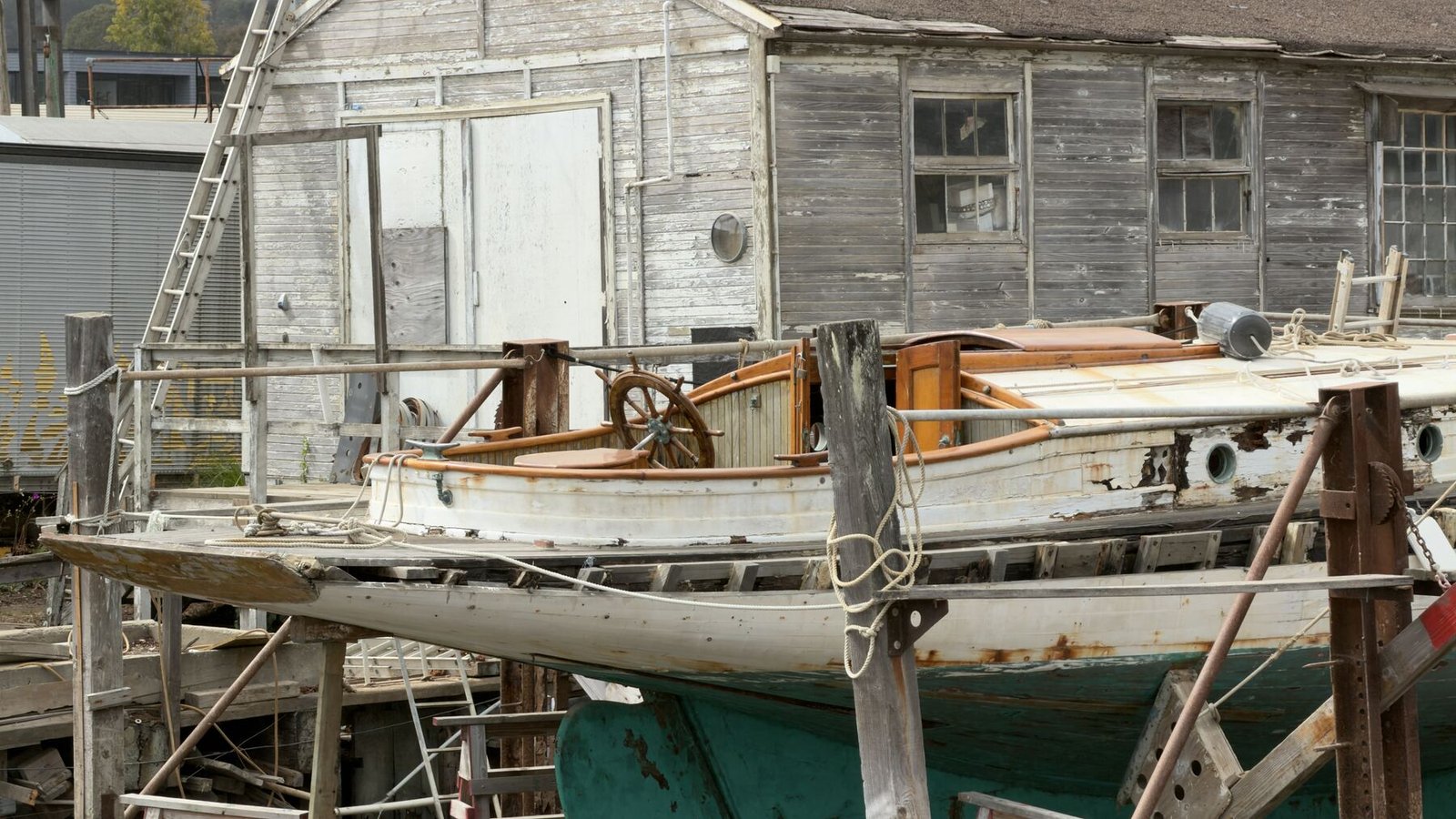
She lies afloat at Richardson Bay Boatworks in Sausalito, under her winter cover. This year she crossed the Bay from San Rafael, and her spars, sails and gear were gathered in. In August the yard hauled her, went through her hull and made her tight. The Logbook follows the work as it happens.
What is being done to her?
First she is opened up, so that the yard can see her whole structure and plan and price everything that follows. Then come new white oak frames, a new deck and a new cabin house, on the keel she was launched on and to the shape she has always had. Her own masts, sails and rigging are ready to go back into her. The aim is a schooner that sails and races on this Bay for another hundred years.
Who is doing the work?
The shipwrights of Richardson Bay Boatworks, a family yard at work on classic wooden boats on the Sausalito waterfront since 1986. The yard decides how the work is done.
Is she being taken apart and built new?
No. Her keel, keelson and stem are sound and stay where they are, and her hull has kept its shape. It is more than a refit and it is not a new boat. She is rebuilt from within, on her own backbone.
How much of the 1906 boat will be left?
Her keel, keelson and stem, her bulkheads, her rudder, parts of her cabin house, and every plank that is sound. Most of her structure will be new. That is how wooden boats last. Yankee has been repaired and altered many times, and what has stayed constant is her shape, her record and her use.
We will keep a full inventory of what is retained and what is replaced, and publish it.
Is she being put back to 1906?
No. She was launched as a sloop and given her schooner rig in the 1910s. She is rebuilt as the gaff schooner she has been for more than a century, with the rig she already has.
Why not repair the worst of it and go sailing?
Her frames have held her hull to its shape and kept her planking tight, which is why she can be rebuilt at all. But they are beyond restoring along the whole length of the boat, and the yard and the surveyor both reject partial repair in writing. Every frame is replaced.
Would another yard be cheaper?
Perhaps, on paper. It would also mean moving a boat that should not be moved, starting again with people who have not seen inside her, and taking the work away from Sausalito.
What happens after she is launched?
She sails and races on the Bay, with capable crews and a wider circle sharing her care. A lasting result needs a suitable berth, dependable funds for maintenance, and people prepared to take responsibility in turn. Those arrangements are not settled yet. They will be settled, and published, well before she is launched.
Money and time.
What will the whole work cost?
We do not know yet, and we would be guessing if we named a figure. The first stage has a goal of $75,000. Each later stage gets a goal when the yard has priced it and the board has approved it. Anyone considering a significant commitment is welcome to go through our working figures with us in person.
What does the first $75,000 pay for?
Stage 1, Open her up. Her interior comes out, labelled and stored, and her deck hardware is removed, recorded and photographed. With the interior out, the yard can see every frame, the floors, the backbone and the inside of the planking for the first time, and can plan and price the structural work. Nothing done in this stage has to be undone if the plan changes.
Why does only the first stage have a figure?
Because it is the only stage that does not depend on what is found inside her. There are six stages. Each later goal is published when the yard has priced that stage.
How long will it take?
Years. How many depends on what the yard finds and on how steadily the goals are met. When stages are funded ahead of time the yard can carry on from one to the next, and she sails sooner. We give no completion date, and we will not until the yard can stand behind one.
When does a gift go to work?
When its stage is funded. The work is paid for one stage at a time, and each stage begins when its cost is in hand. Gifts are applied to the current stage first, and a gift that arrives after a goal is met carries forward to the next.
What happens if the money stops?
The work pauses at a point the yard agrees is safe, with the boat closed, covered and cared for, and it resumes when the next goal is met. No stage starts without its cost in hand, so a pause never leaves a stage half paid for. The Foundation does not borrow against the boat.
Are gifts tax-deductible?
Yes. Gifts to the Foundation are tax-deductible to the extent the law allows, and each is acknowledged in writing. We suggest confirming your own position with your adviser.
Is this an investment?
No. Support is a gift to a nonprofit. It carries no financial return and no share in the boat. What it returns is a schooner sailing on the Bay, several years of skilled work on the Sausalito waterfront, a full public account of how the money was spent, and a lasting place in the boat herself.
How are supporters recognized?
In the boat herself. Supporters’ names will be engraved into her, on parts such as a frame, a butt block, the keel or the bulwarks. Other benefits are being worked out and will be set out with the giving information. No name is published without the supporter’s consent.
How will I know what my gift did?
Every stage ends with a dated account of what was done, what was found and what it cost, with photographs, and the same account goes to everyone. Supporters are welcome to see the boat at the yard, by arrangement.
How do I give?
The support page sets out how gifts work and how to take part.
The work is paid for one stage at a time, and each stage begins when its cost is in hand. The first is $75,000.
How the work is run.
Who looks after her, and who decides?
The Golden Gate Wooden Boat Foundation has her in its care. Its board decides what is spent and when each stage starts. The yard owns the method, the detail of the work and safe access to the boat. The Foundation’s project lead coordinates between them and is responsible for the public account.
Could she be sold?
Not for anyone’s gain. She belongs to a nonprofit foundation and is held for the public good. Under the bylaws no decision to part with her can be made without the unanimous approval of the entire board.
What is agreed in writing?
Each stage is covered by a written agreement with the yard that states the work, the price, where removed parts are stored and how the boat is insured.
How is the work reported?
Each stage produces one written report, with credited photographs and, where possible, film. The same report goes to the board, to supporters, to this website and to the press. It records every part retained from the 1906 boat and every part renewed, with the reason.
Does anyone outside check the work?
The survey was made in consultation with the yard. The board is considering an independent opinion at two points: once her interior is out and her structure can be seen, and at the close of each later stage.
Is anyone at the Foundation paid?
No. The Foundation is run by volunteers. No director, officer or volunteer is paid. The shipwrights and the trades are paid properly for their work.
What could go wrong.
These are the risks we see, and what we do about each.
What if more is found when she is opened?
The first stage exists to find it early. Each later stage is priced from what the yard can see at the time.
What if the job takes too long and prices rise?
A long job tests the patience of supporters and of a busy yard, and later work will cost what it costs then. Each step is reported as it is finished, and funds beyond the current goal go first to keeping the work moving.
What if money comes slowly?
The plan is built for it. Work pauses with the boat closed and safe, nothing is borrowed, and the structural work does not begin until the board has priced figures and confirmed funds in front of it.
What if the yard’s time or site changes?
The yard is busy, and the future of the Marinship is being argued over. We keep the plan and the drawings in a form another yard could take up, and we keep our relationships with other Sausalito yards and shipwrights.
What about weather, loss or damage?
She is kept covered, and insurance is confirmed before each stage begins.
Does too much rest on too few people?
The Foundation is small, and we treat that as a risk. The board is dividing responsibility for the treasury, the relationship with the yard and the review of what is published among its members, and the project is documented so that others can pick it up.
Taking part.
Can I work on the boat?
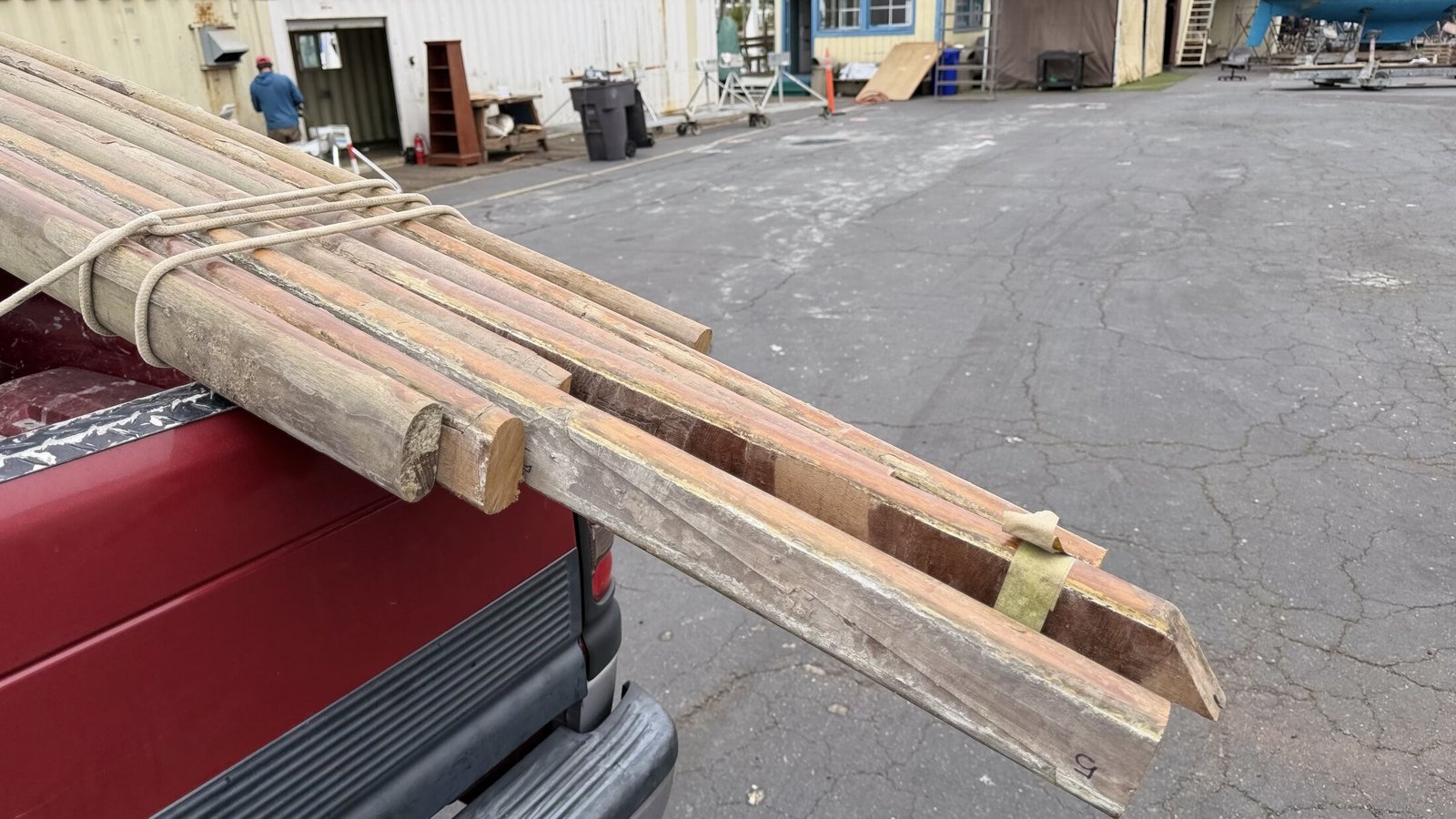
Yes, in time. The structural work at the yard is done by the yard’s shipwrights. What follows it is work for willing hands, and there is a great deal of it: renewing her interior, stripping and varnishing her spars, rails and hatches, and setting up her rig.
Work on the boat herself begins once the structure allows it, and we will say when. The Foundation’s board are her first volunteers, and they will be working alongside everyone who joins them.
What can I do now?
The work around the boat is open now: research in her archive, photography and film, events, and the telling of her story. The support page says how to join.
Can I sail in her?
Tell us if you want to. She carries a large gaff rig and has never had a winch aboard, so she is sailed by hand, by people working together. She will need a large and practiced crew, and people willing to become one. We keep the list and we will call on it.
Can I give something other than money?
Yes. Timber, materials, tools, storage and professional services are welcome, and each reduces what has to be raised. Gifts in kind are counted against the cost they replace.
What can a larger commitment do?
It can bring a later part of the work forward. Stages funded ahead of time let the yard carry on from one to the next without a pause. Other steps wait on funds of their own: the cabin house finished in every detail before launch, a new engine and full systems, the interior before her first sail, and a full technical record of her hull. We would be glad to talk it through, with our working figures on the table.
I know wooden boats. Do you want advice?
Yes. Shipwrights, naval architects, surveyors, historians and people who have run projects like this one can save us from mistakes. We want to hear from them, especially where they disagree with us.
Can I come and see her?
Yes. She is at the yard in Sausalito, and visits can be arranged.
How do I follow the work?
Read the Logbook, our running account of the boat and the work. We send it by email to anyone who asks.
How do I reach the Foundation?
Through ggwbf.org.