The Foundation.
The Golden Gate Wooden Boat Foundation took up Yankee’s care from within the family that had kept her. In 2026 she crossed the Bay to Richardson Bay Boatworks in Sausalito, where the yard hauled her, went through her hull and made her tight.
John McNeill’s appeal of November 2025 (Chapter 12) brought a new group of Bay sailors to the boat before the year was out. They formed the Golden Gate Wooden Boat Foundation to carry on what one extended family had done for five generations, in a form that does not depend on any one person. Her care came to the Foundation from within that family, and the people who looked after her before are still part of it as Directors Emeriti and advisers.
The Foundation’s purpose is wider than one boat. It exists to keep the historic wooden yachts of San Francisco Bay sailing, and to stand behind the shipwrights, riggers and sailors whose skill makes that possible. It holds that a wooden boat is best preserved by being used. It owns no yard and employs no shipwrights. The work goes to the Bay’s working yards and trades, who are paid properly for it. It is run by volunteers, and no director or officer is paid.
Its directors race and maintain boats of the Bay’s own classes, the Bears and the Birds, and lead both class associations. Hans Hansen is president, Jason Chan treasurer, Nicholas Kolaitis secretary and Will Campbell a director. John McNeill and Jon Price are Directors Emeriti. Yankee is the Foundation’s flagship, the first and the largest of its projects. Under its bylaws no decision to part with her can be made without the unanimous approval of the whole board.
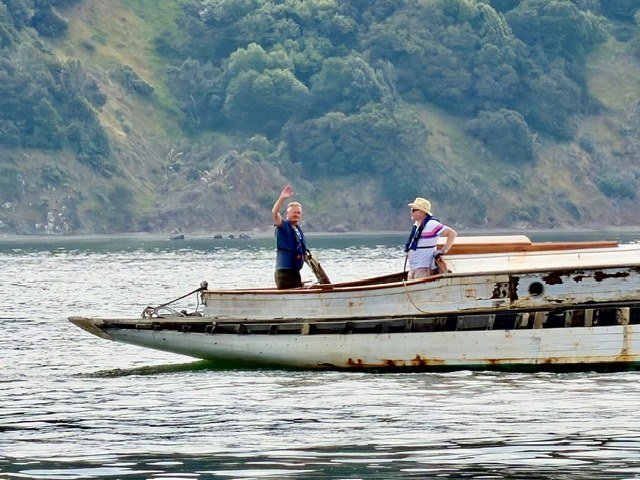
Across the Bay, and gathered up.
Before anything could be planned she had to be moved and everything that belongs to her had to be collected. That took most of 2026. In March a diver cleaned her bottom at the berth in San Rafael and sealed what needed sealing. She then crossed the Bay to Richardson Bay Boatworks in Sausalito.
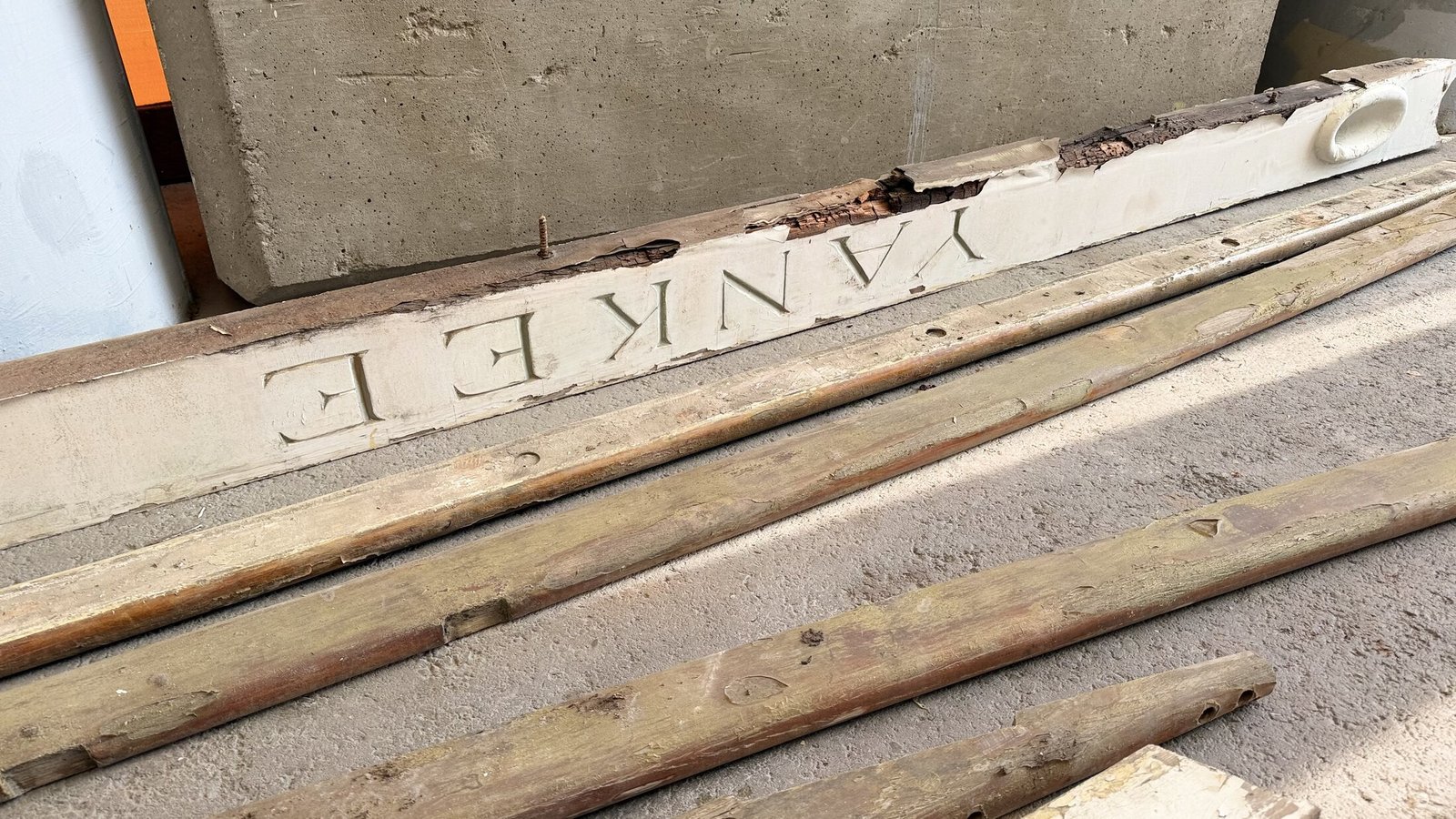
Over the spring and summer her gear followed. Her removed parts and her eight spars came out of the boatyard in Point Richmond where her earlier work had been done. Two of the spars are solid masts fifty-five feet long. The members of Point San Pablo Yacht Club in Point Richmond took the masts and spars in for temporary storage. Her sails, standing rigging, covers and smaller gear, down to her silver cups, came out of paid storage and went under cover. By July nothing of hers was left in paid storage.
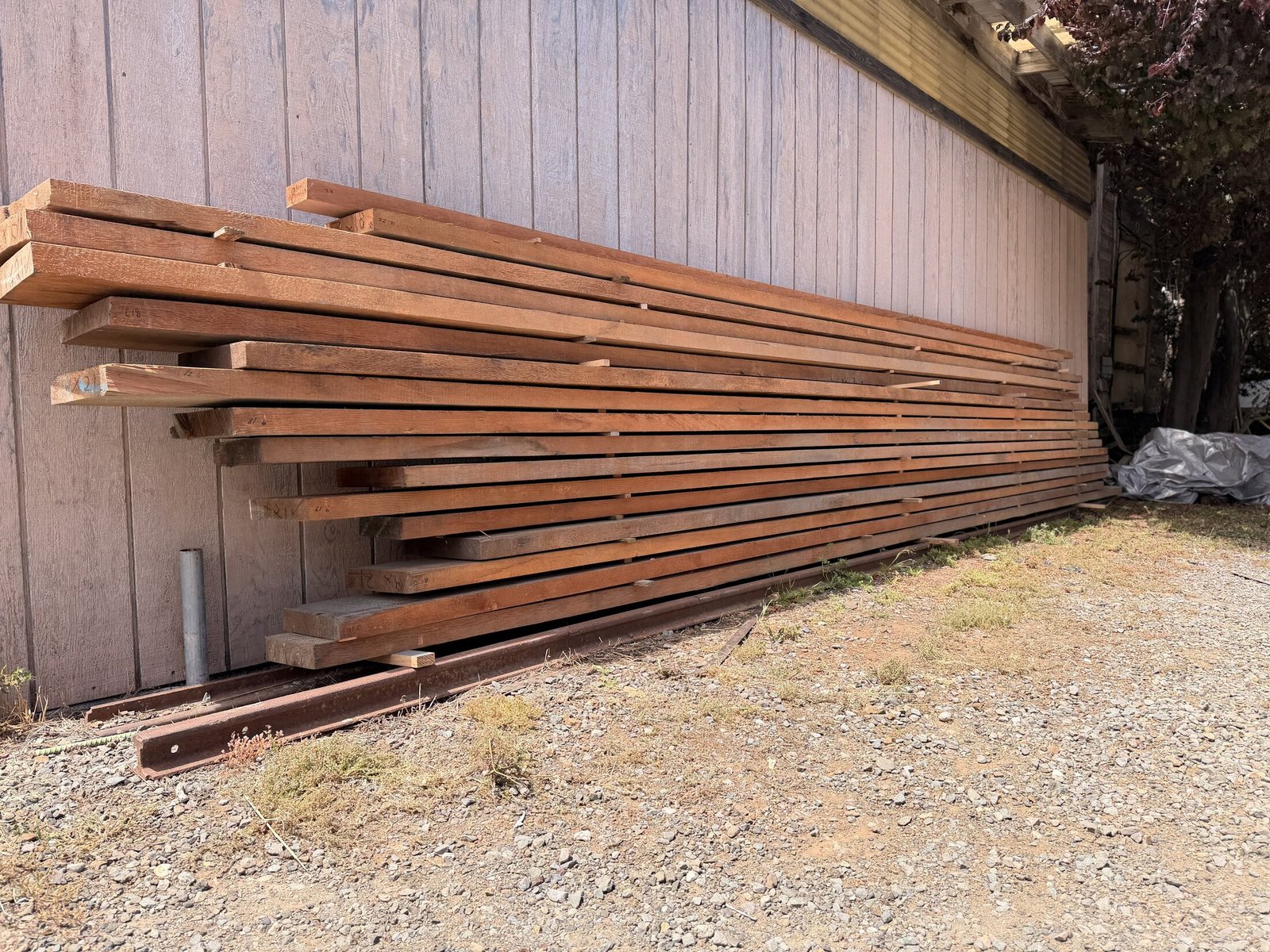
More than 1,000 board feet of clear, air-dried Douglas fir, bought for her years ago, went to the yard and was stacked and stickered there. In store with it are her two masts, five booms and bowsprit, a suit of North Sails in new condition, and her standing and running rigging. The rig that goes back into her already exists.
The yard.
Richardson Bay Boatworks stands on the Marinship waterfront in Sausalito, a few miles across the Bay from where Yankee was built. It is a family yard. Ross Sommer founded it in 1986, and its trade is the repair, restoration and rebuilding of classic wooden boats. His son Andrew Sommer manages it and will lead her rebuild for the yard.
The yard stands on Arques ground, and the ways she was hauled on are among those the Arques shipyard worked. The Arques family built boats in Sausalito from 1913, and the Arques School of Traditional Boatbuilding carries Don Arques’s name. Shipwrights who trained there have worked on Yankee this year. Graham Wheelock, a boatwright at the yard and a graduate of the school, did much of the work of making her safe. Holden Crane, an independent Sausalito shipwright and another graduate, examined her structure with Andrew Sommer.
Hauled, examined and made tight.
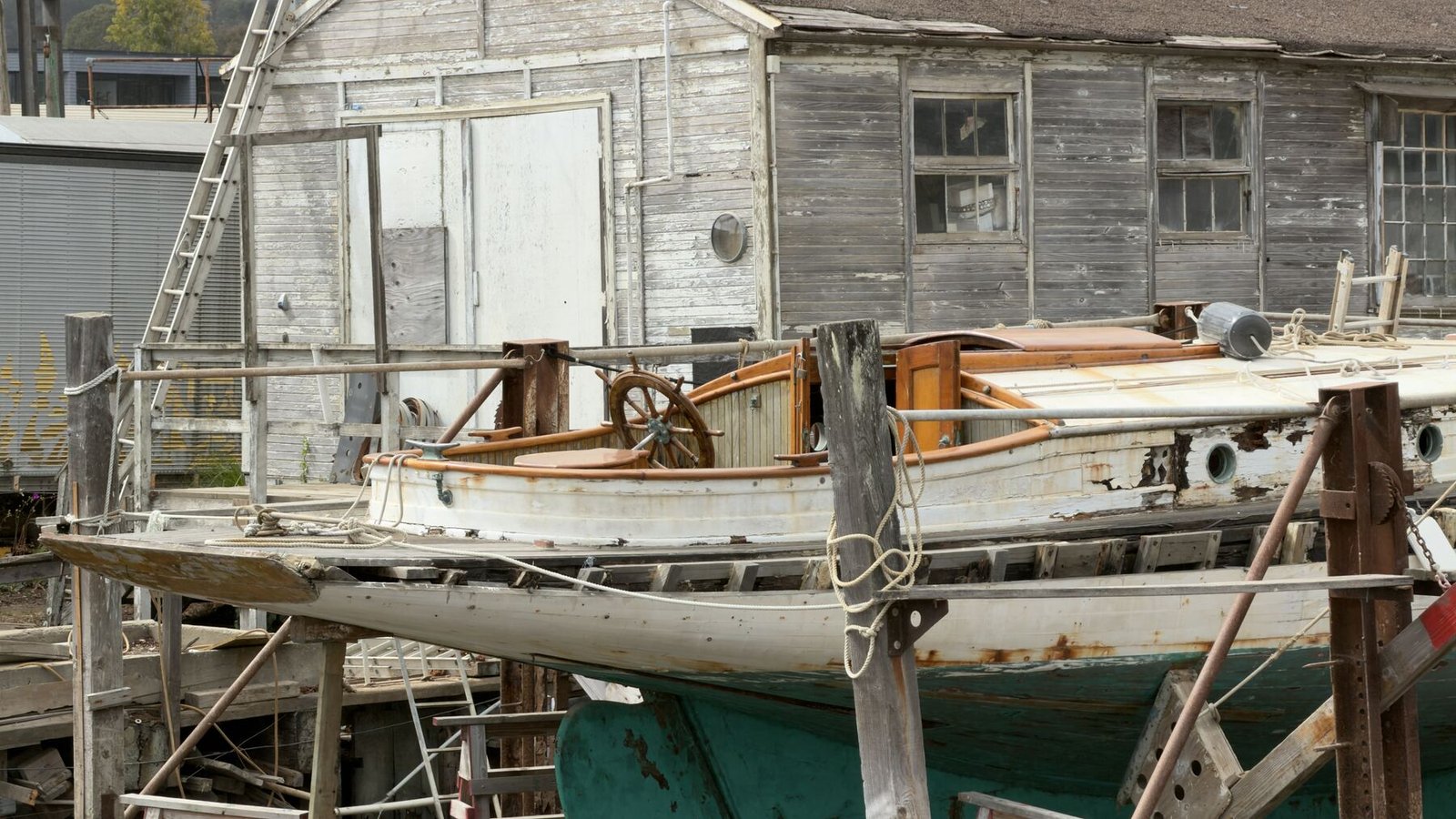
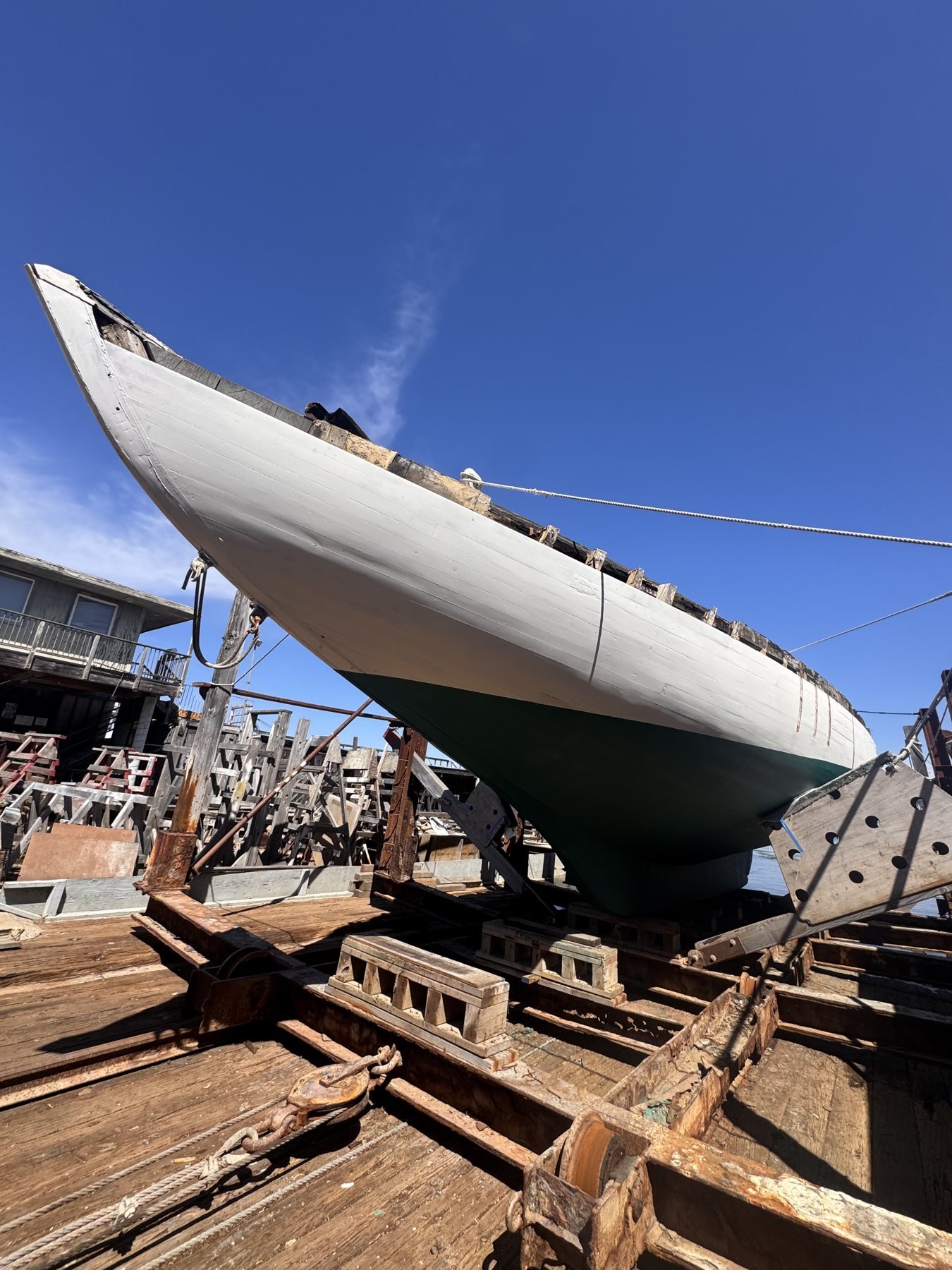
In August the yard hauled her on its ways and washed her down, so that her whole hull could be examined out of the water. Planks were taken off where they were rotten or worm-eaten, and near the keel and the stem, to show the structure behind them. A marine surveyor examined her alongside the yard’s shipwrights.
Her frames have done the work that matters most. With the laminated frames fitted beside them in an earlier refit, they have held her hull to its shape and kept her planking tight. Their upper ends have stood exposed to the weather, with her deck beams, and have deteriorated too far to restore, so every frame will be replaced. Her keel, her keelson and her stem are sound, and her hull is still fair. That is why she can be rebuilt on her own backbone.
The yard then closed her up. New planking went in where it was needed, the worst of the worm damage was repaired, and her seams were attended to. Temporary shoring was fitted under her stern. Her through-hull fittings were serviced and her zinc anodes renewed. Her bottom was given new antifouling paint, her topsides were sealed with fresh primer, and the varnish on her transom was resealed.
She went back into the water in the autumn. In November 2026 she lies afloat at the yard, under her winter cover.
The rebuild, in six stages.
What comes next is more than a refit and is not a new boat. Yankee will be rebuilt from within, on the keel she was launched on and to the shape she has always had. She gets new white oak frames, a new deck and a new cabin house, and her own masts, sails and rigging go back into her. The aim is a schooner that sails and races on this Bay for another hundred years.
The work is set out in six stages and paid for one stage at a time. Each stage begins when its cost is in hand. The first opens her up, so that the yard can see her whole structure and plan and price everything that follows. Its goal is $75,000. The stages after it deal with her backbone, her frames and planking, her deck, cockpit and cabin house, her launch, and her rig, engine and first sail. Their goals will be published when the yard has priced them.
She will be rebuilt from within, on her own backbone and inside her own shape.
The structural work at the yard is done by the yard’s shipwrights. Volunteers come in later, when her interior is renewed, her spars, rails and hatches are stripped and varnished, and her rig is set up. After that she will need a large and practiced crew. The Foundation’s board are her first volunteers. They gathered her gear and sorted her record this year.
Gifts to the work are tax-deductible, and supporters’ names will be engraved in the boat herself. Every stage ends with a dated public account of what was done, what was found and what it cost.
Her record.
The Foundation holds her record as well as her hull. This year the family archive was sorted and catalogued, her logbook was transcribed, and her history was checked against outside sources. Where a family story could not be confirmed, these chapters say so.
On October 26, 2026 we visited the Maritime Library of the San Francisco Maritime National Historical Park and photographed its prints, glass plates and drawings of her. They include dated photographs from 1910 onward and a 1989 copy of her hull lines. The overview describes what was found.
The ship’s own log ends in 1998 (Chapter 15). The Logbook on this site is its successor: a running account of the boat and the work, sent by email to anyone who asks.