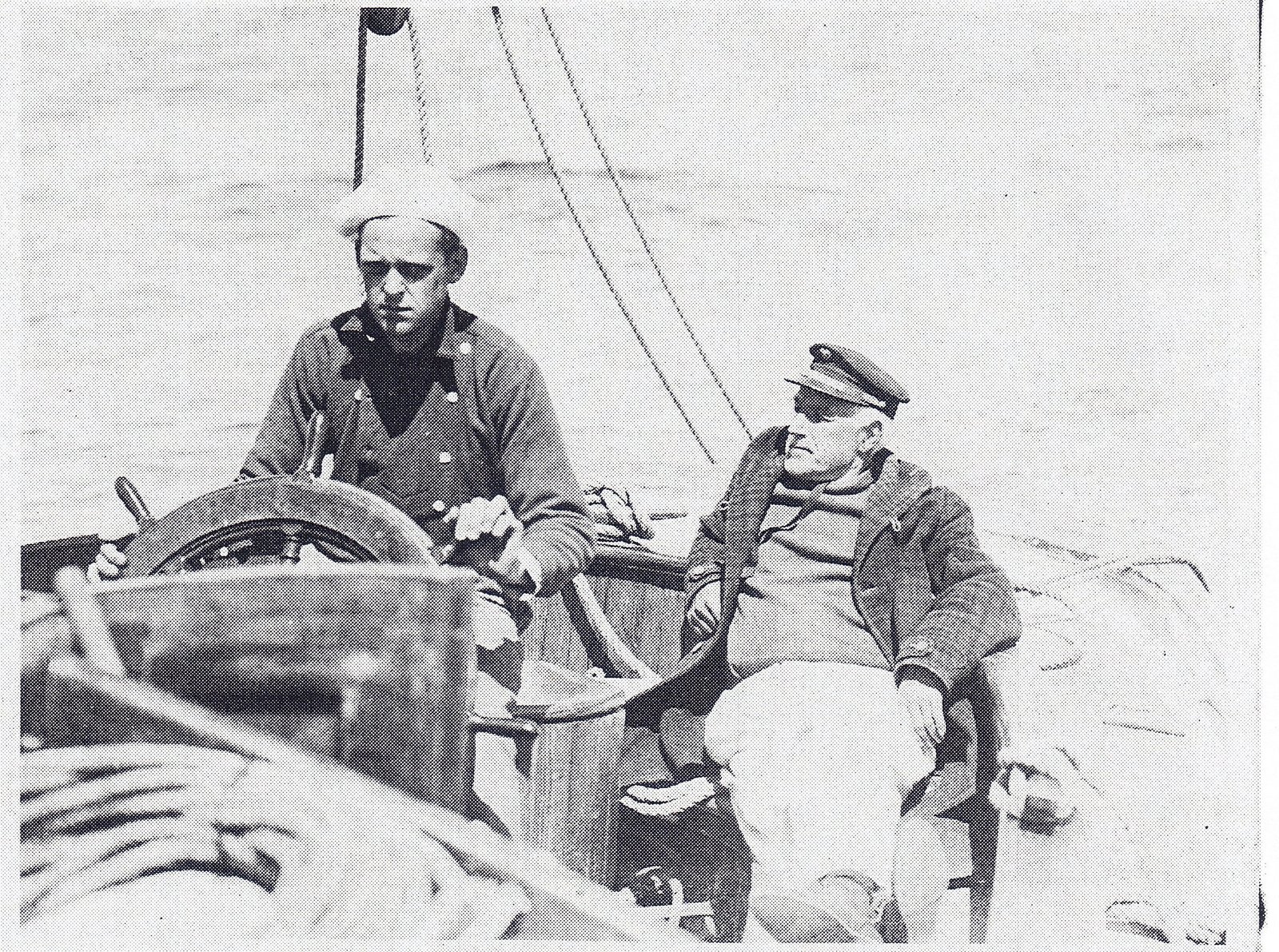
Captain Charles Miller.
Charles E. Miller bought Yankee in 1907 and kept her until about 1925. He raced her on the Bay, cruised her to Catalina, and made her a schooner.
The buyer was Charles E. Miller, a well-known San Francisco yachtsman and a member of the Bohemian Club. He was a sociable man who liked to entertain friends aboard his boats, and he wrote up his sailing for the old San Francisco News. He owned a good many boats.
He once called Yankee the sweetest sailing boat he had ever owned.
Miller raced her hard on the Bay. Her rivals included Nixie, Pronto II, Presto, Fulton G., Alert, Mah Pe and Westward. He also cruised her to Catalina Island and back almost every winter. She had no engine then, and the California coast is an exposed one.
In 1910, by the family’s records, she won the John Hammersmith Trophy at the Corinthian Yacht Club. In 1912 she made the fastest time in the Hammersmith race and lost on handicap.
Walter Scott’s photographs.
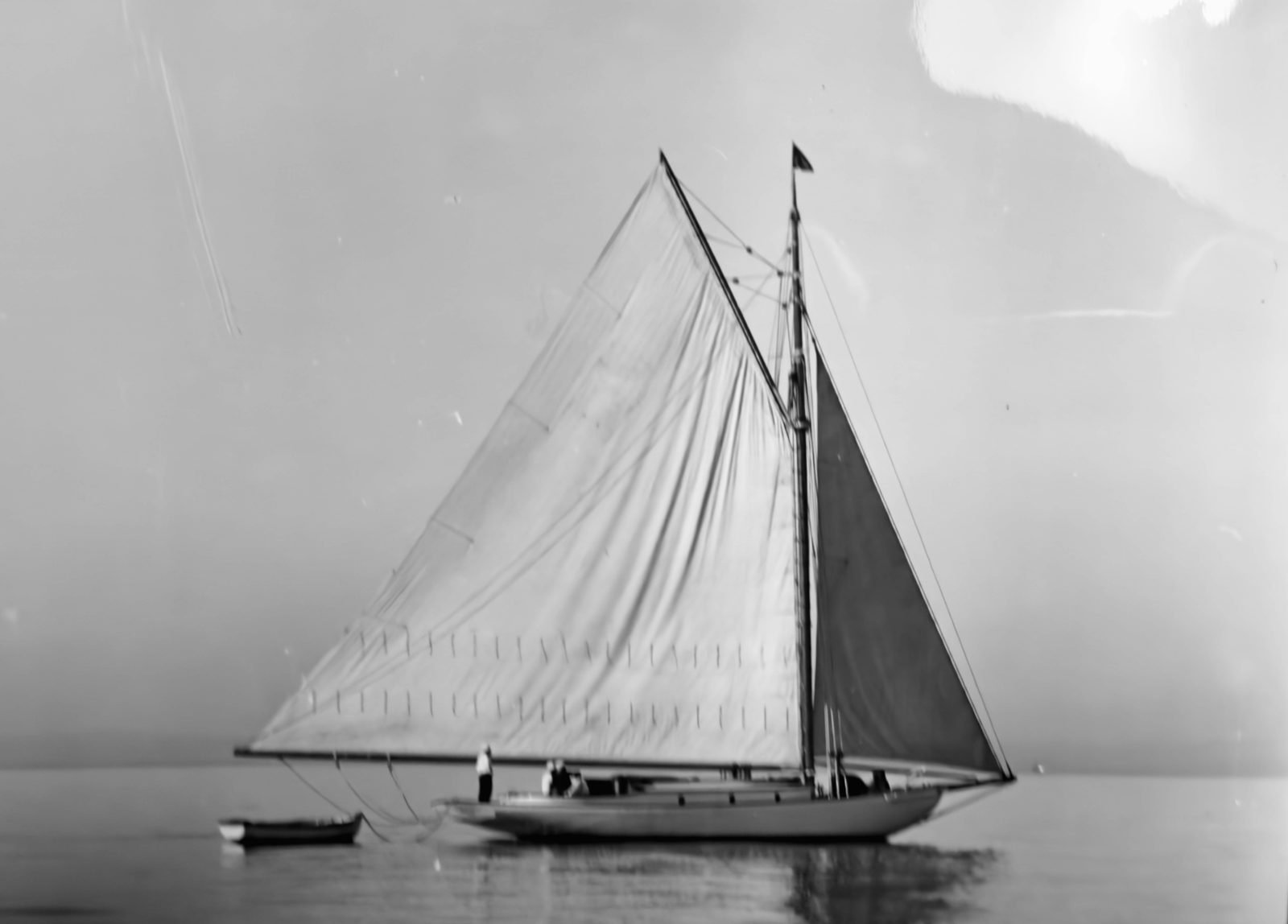
The Maritime Library of the San Francisco Maritime National Historical Park holds photographs of Yankee from Miller’s years. Most are from the Walter A. Scott collection. Scott photographed yachts on the Bay for more than half a century. We saw his prints and glass plates on October 26, 2026. The dates and captions given here are the library’s, except where we say otherwise.
The earliest dated plates are two from the Corinthian Yacht Club regatta of June 11, 1910. One shows her alone, with her port side to the camera. The other shows her with Meteor and Helen. That was the year of her Hammersmith Trophy. The envelopes name only the regatta, so we cannot say that either plate shows the Hammersmith race.

One of Scott’s photographs can be dated more closely than the library dates it. The library puts a picture of her under way at about 1914. Her own archive holds a framed print of the same photograph. The back is stamped “Walter A. Scott, 658 Market St., San Francisco” and inscribed in pencil: “Mr & Mrs Bruno Kaufner, Best wishes for a merry Christmas 1910 from your friends, Sonny, Carrie & Alf”. The last name is hard to read. The photograph was therefore taken in 1910 or earlier.
Bruno Kaufner was probably one of her crew. The San Francisco Call of July 9, 1911 calls him “the well known Corinthian tar”. On August 13, 1912 the same paper reported him back from southern California. He had sailed in Yankee, which the paper calls a sloop, in the race to Santa Cruz on July 19, and Charlie Miller had stayed on with her at Catalina. We have read that report in the Library of Congress’s machine transcription and have not yet checked it against the page. We have not identified Sonny, Carrie or Alf.

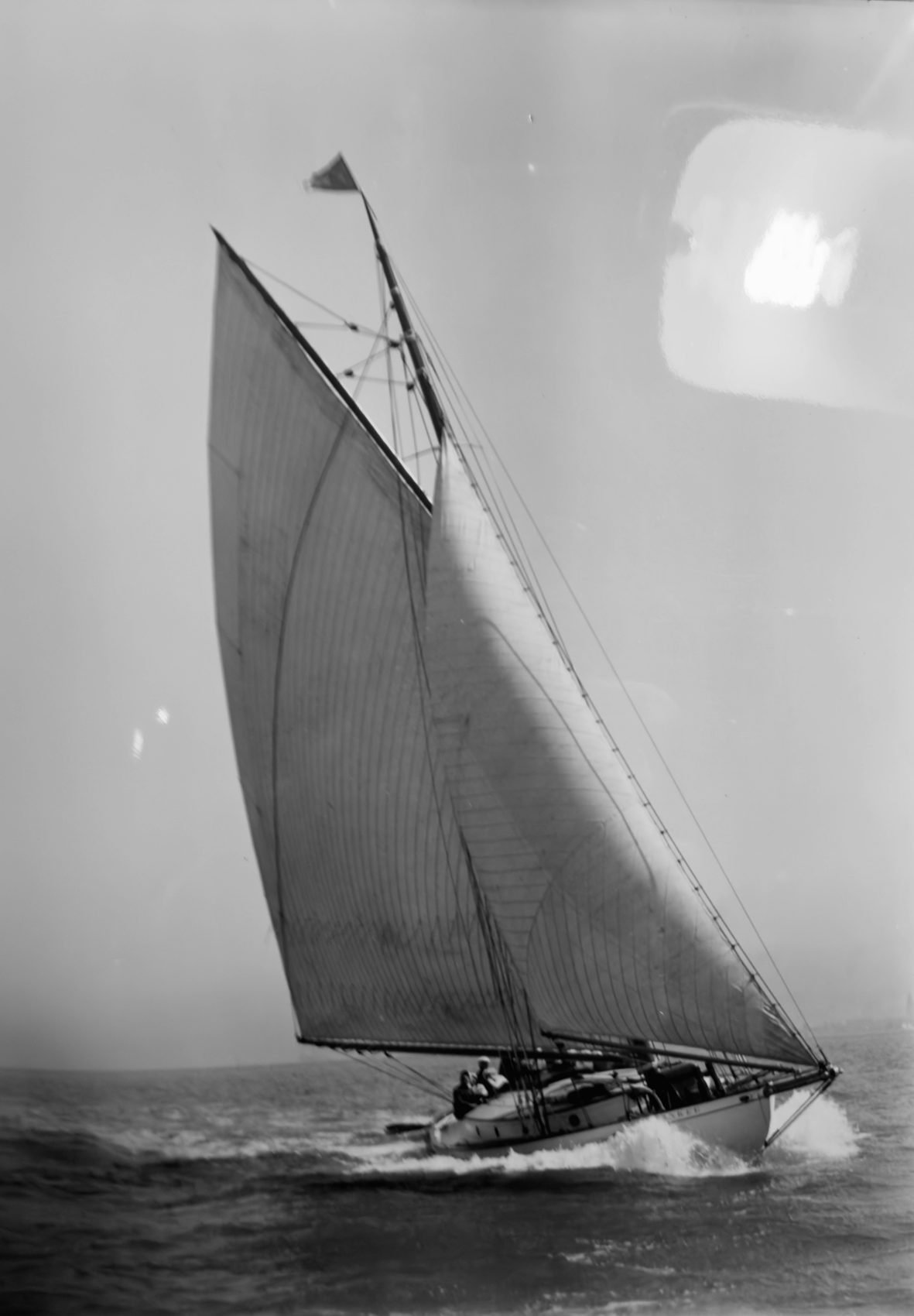
Scott’s later plates follow her through three more seasons. On May 30, 1912 he photographed her under way with Fulton G, one of the rivals named above. A plate of 1913 shows an “H” on her mainsail.

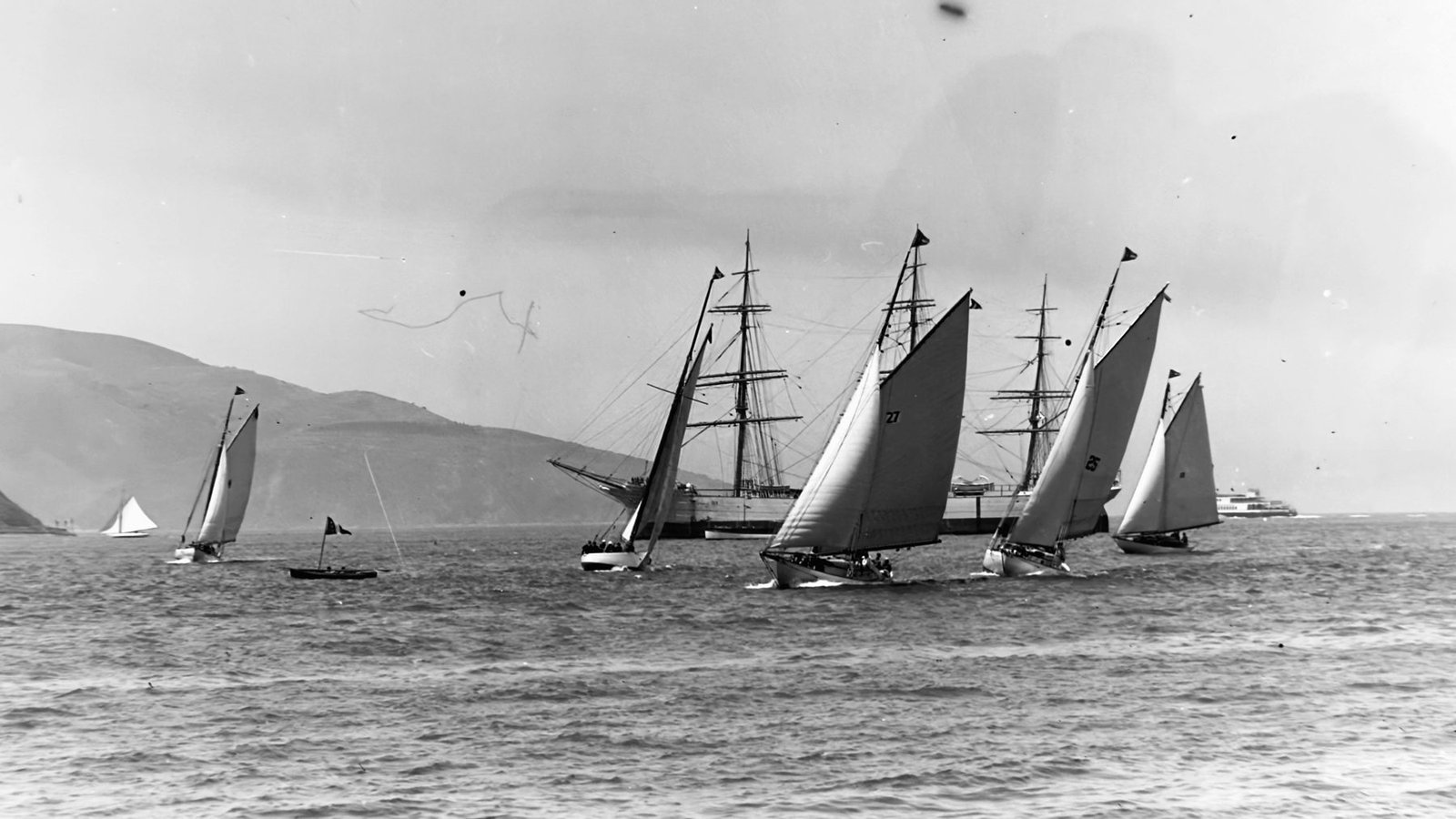
Three plates are dated June 13, 1914. They show her under way with “25” on her sail. A fourth plate shows the fleet that day. Its envelope names Yankee, Pronto II, Mah-pe, “Nixie?” with its question mark, and a sloop the library has not identified. Three of those are rivals this chapter has already named. The envelopes call the race the Lipton Cup race, and that raises a question we take up below.


From sloop to schooner.
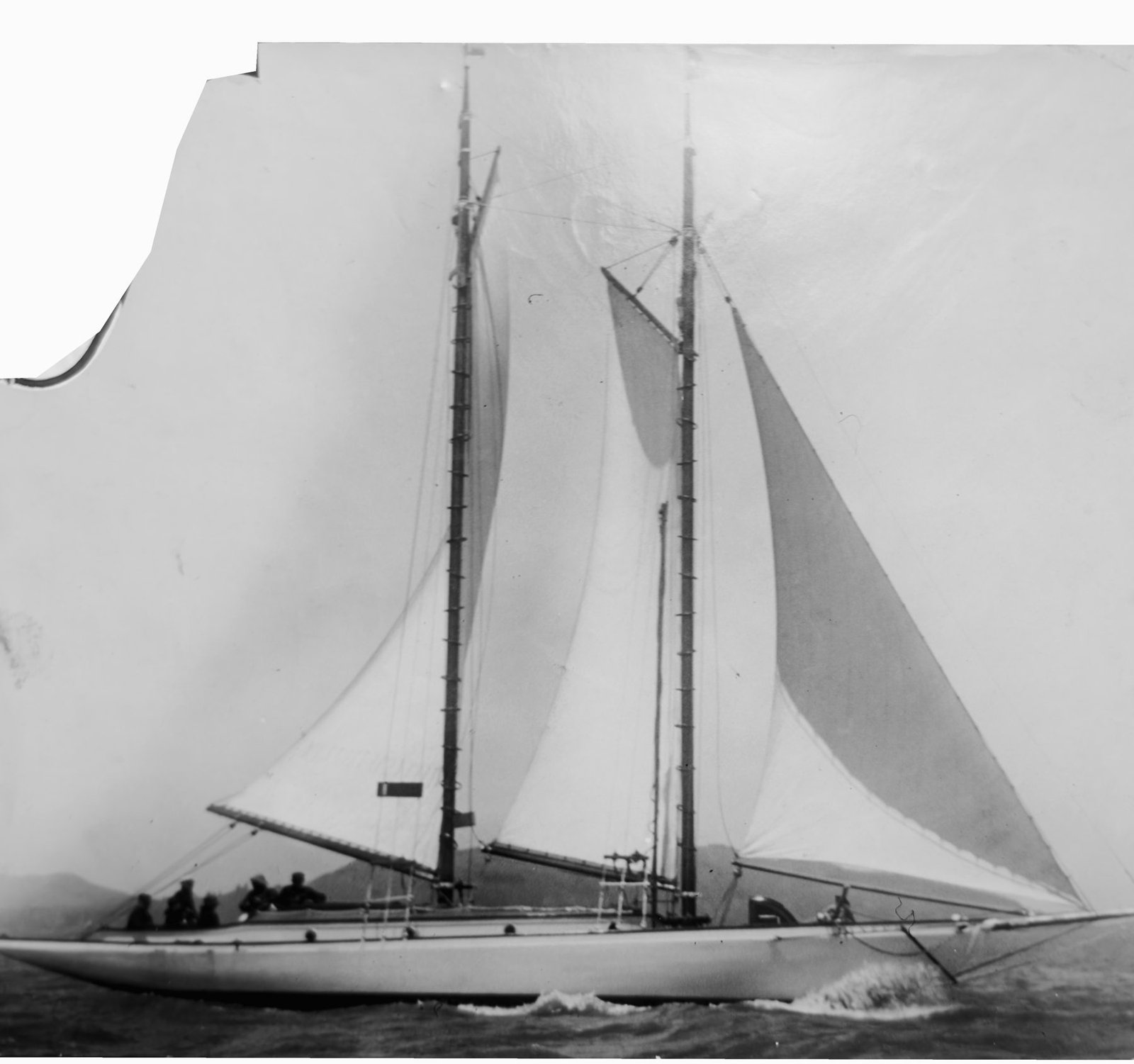
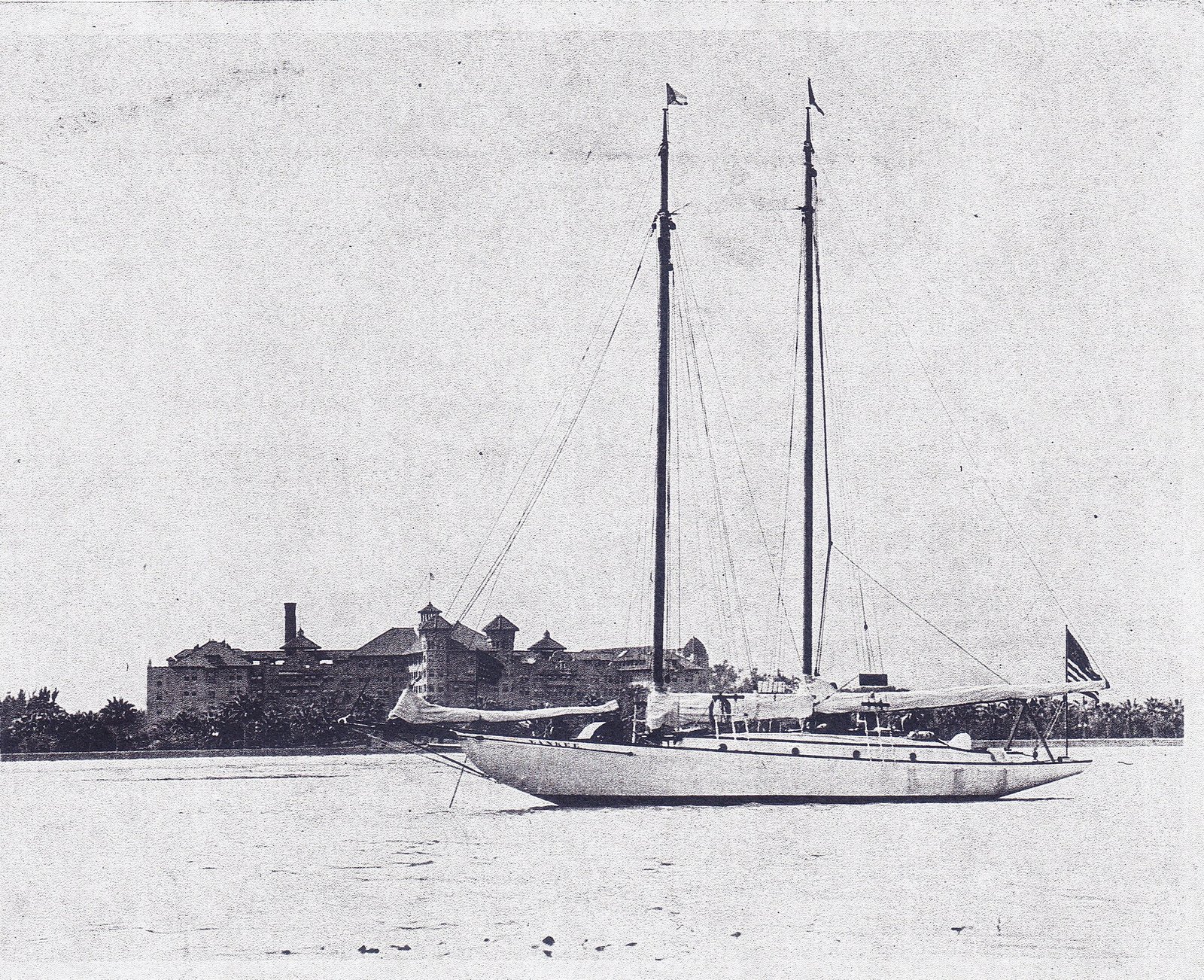
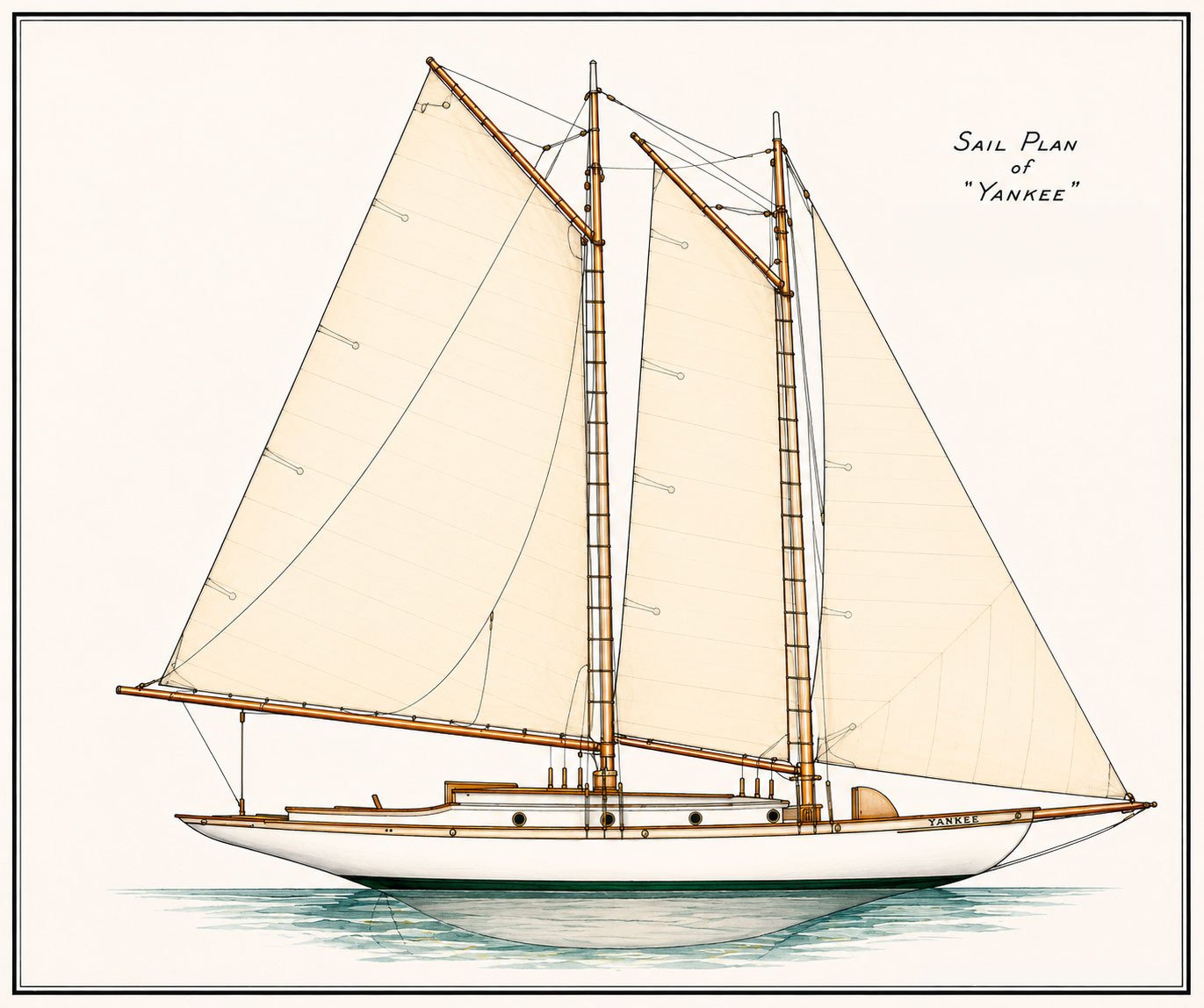
Miller made Yankee a schooner. He added a foremast and gave her the gaff schooner rig she carries today. By the family’s account he took out the centerboard at the same time and filled the trunk with concrete. He also installed a gasoline engine, set off to port to clear the old trunk. The changes suited cruising and the entertaining Miller liked. They cost her the help the centerboard had given her to windward.
The year is not settled. John McNeill’s account says about 1911. Other family documents say the middle 1910s. The Call still called her a sloop in August 1912, and the library’s captions call her a sloop as late as June 1914. A photograph in the library dated June 6, 1922 shows her with two masts.
One more source disagrees with all of these. The copy of her lines that Jack Ehrhorn made in 1989 carries his note that the schooner rig was installed in about 1908, and another that the centerboard was permanently removed in 1939 (Chapter 1). Neither note has been reconciled with the rest of the record. Until it is, we say that she became a schooner in the 1910s.
The Exposition of 1915.
The Panama Pacific International Exposition opened in 1915 on the filled tidal flats of Harbor View, where Frank Stone’s yard had stood. Yankee raced off the fairgrounds and won her division in the Exposition’s regatta.
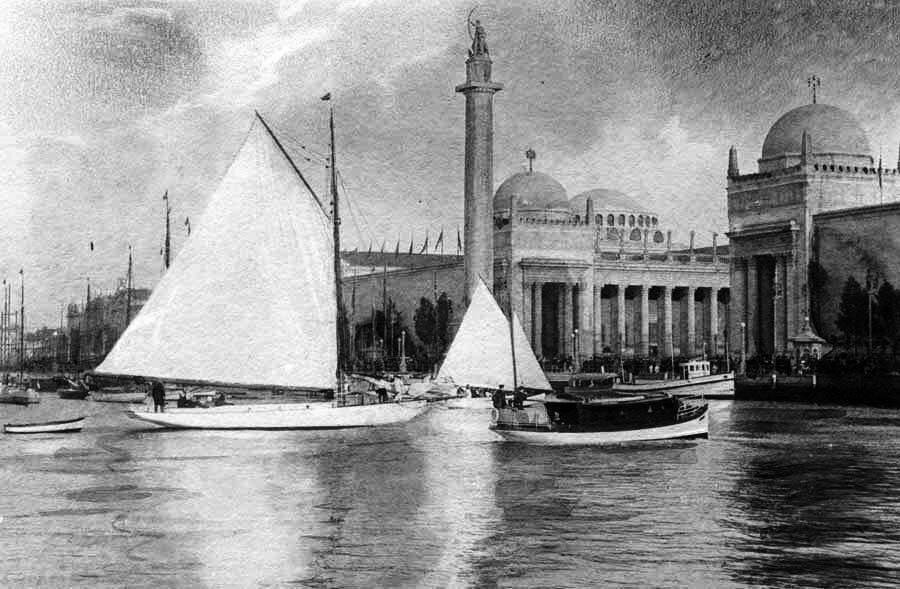
The trophy for that win is a small sterling piece by Shreve & Company. It was lost for decades. It turned up at an estate sale among a lot of golf trophies, where the retired police chief of the town of Ross recognized it, and it came back to Yankee’s family.
Family records also credit her with winning the first race for the San Francisco Lipton Cup, the trophy Sir Thomas Lipton gave to Bay yachtsmen ahead of the Exposition. Club histories date that cup’s first contest to 1916. If the win was hers, it came just after the fair. The library’s envelopes for the plates of June 13, 1914 call that day’s race the Lipton Cup race, two years before the date in the club histories. We have not reconciled the two, and we give both as we found them.
When the Exposition closed, its buildings were pulled down. The land became the Marina District, and later the site of the St. Francis Yacht Club, within sight of the place where Yankee’s keel was laid.

Laid up at San Rafael.
In 1914 a six-year-old boy named Dennis Jordan sailed in Yankee with his parents. He said later that the day turned him toward a life on the water. Jordan became one of the Bay’s most respected yachtsmen, and he was Commodore of the St. Francis Yacht Club in 1959 and 1960 and again in 1966.
In the autumn of 1923 Yankee was chartered to Goldwyn Pictures for King Vidor’s film Wild Oranges. Chapter 10 tells that story.
By the middle of the 1920s Miller was no longer sailing her. She lay in the basin of the San Rafael Canal, north of San Francisco, with her spars and sails in storage. A schoolboy on a bicycle found her there, and Chapter 5 begins with him.